What’s Growing On In My Garden- Early Summer

Summer is just a week old, and you would think it was Fall the way the rain and cold has been pounding down. This weather is actually a blessing in disguise, because it forces me to get indoor work done that is usually neglected when it’s gardening season!
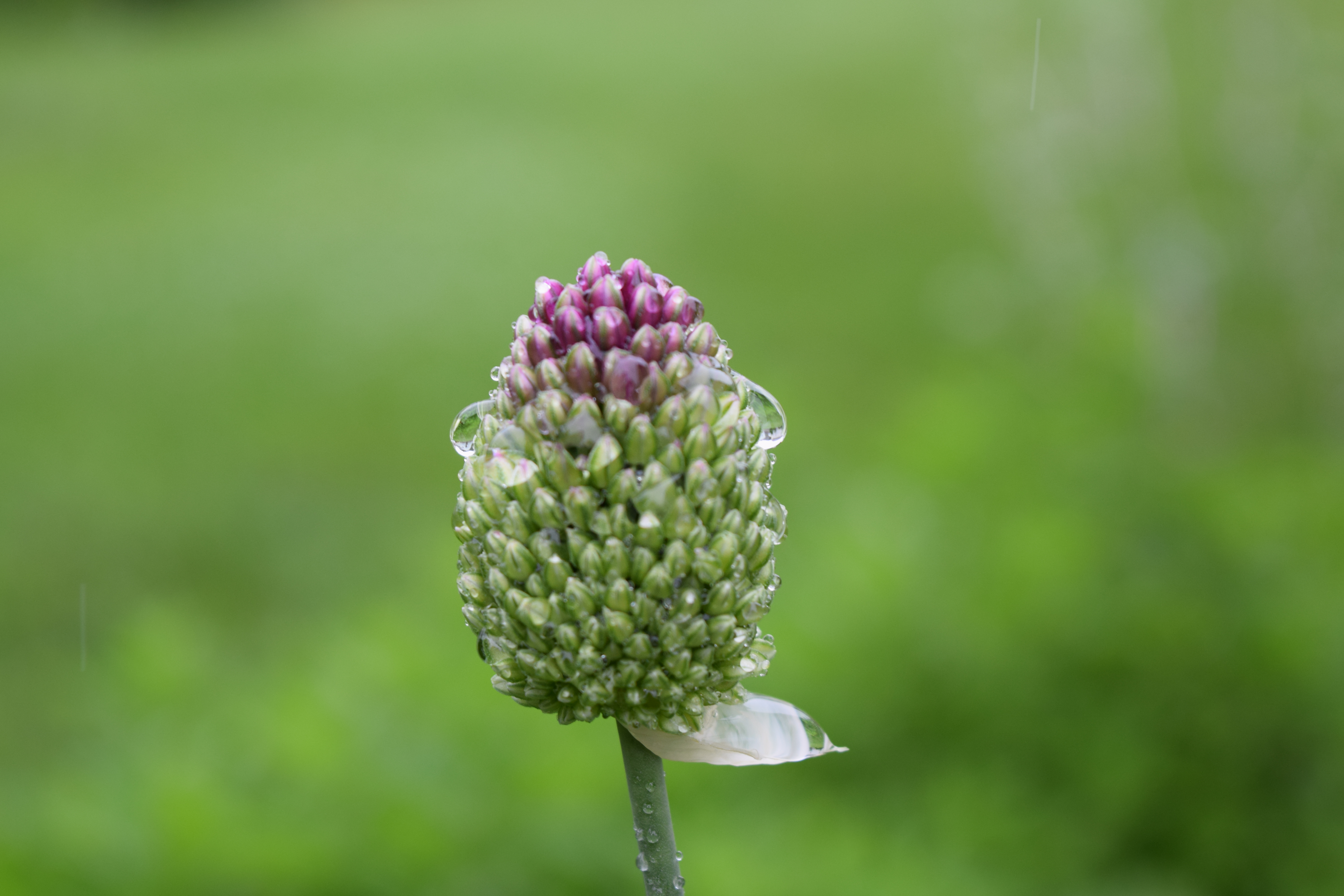
I have a late-blooming Allium that's getting its share of rain!

I have a late-blooming Allium that’s getting its share of rain!

So, I just thought I would give you a rundown of what’s “growing” on in my yard this year.

First, I have to say that everything is coming along just wonderfully this year. I think this endless rain has helped speed up the lush full-grown landscape that surrounds my home. I also believe that it’s the rain that has kept the deer at bay– I haven’t had to spray my hostas and other deer delicacies only twice so far. By this time last year, I was spraying my plants every week!

As always, there is never an end to gardening. I always tell myself EVERY year that what I have done is enough and I don’t need anymore. Well, of course, I keep adding and keeping making new beds. I comb through garden magazines, peruse garden centers and research online all the different perennials I could add to my garden for my hardiness zone of 6a. 

Well, these are the plants I have added this year:

Beautyberry: I have wanted one of these plants for a long time. In the fall, they will have these beautiful (hence the name) purple berries on its branches. They require part sun/shade.

I can't wait to see these berries in all their purpley-ness!

I can’t wait to see these berries in all their purpley-ness!

Indian Holly Fern: I love ferns, as everyone knows at this point. So, how could I not add yet another fern to my back yard shaded area? This fern has light stripes running down the middle of the fronds.

This fern has stunning shades of green!

This fern has stunning contrasts!

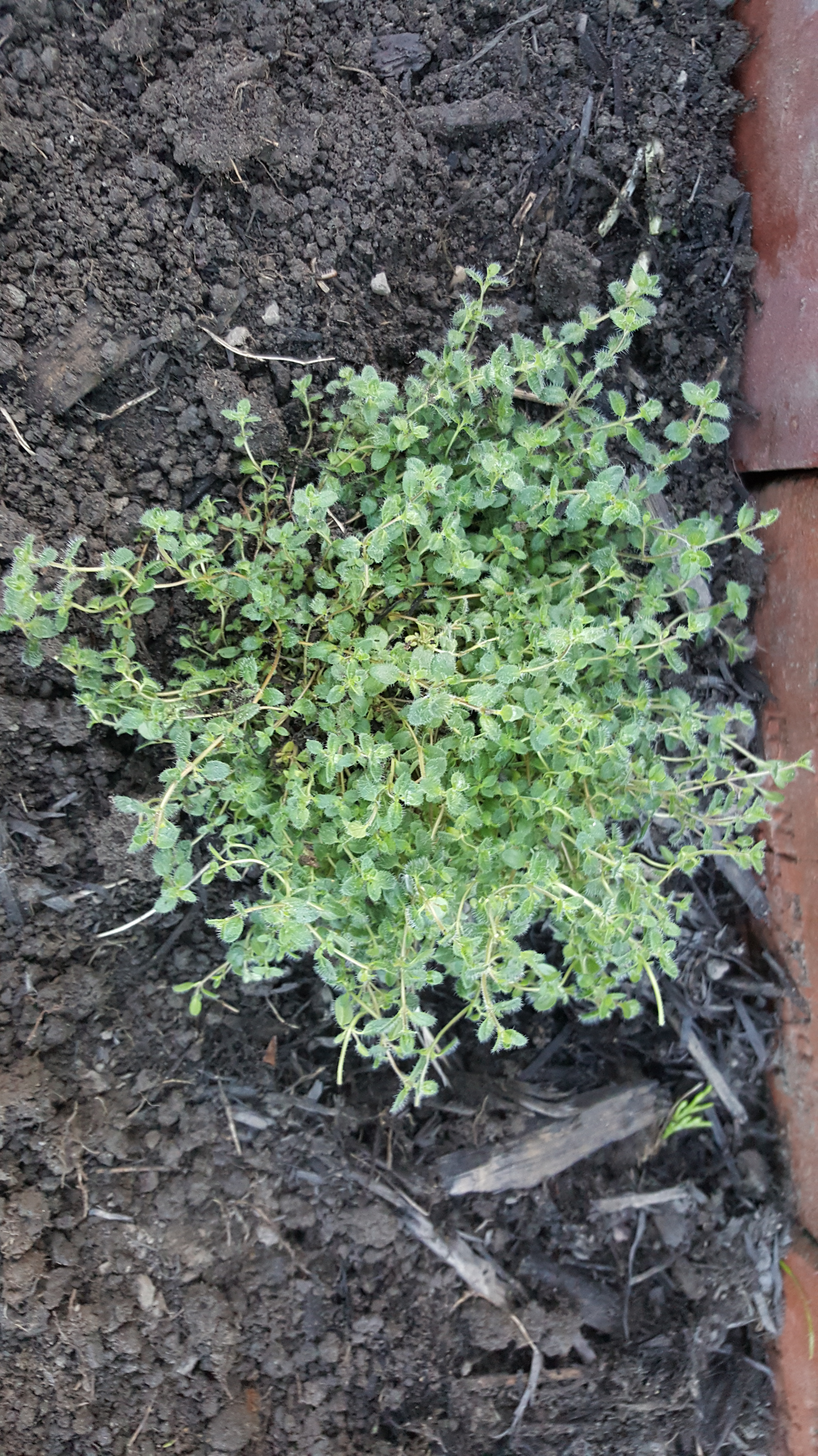
Creeping Thyme: I purchased four of these plants for this little brick wall I made for the flower bed directly behind the garage. I hope they will start growing over the bricks and make for an excellent groundcover look!
20150613_204054

Some other views of my gardens that are blooming beautifully:

Maidenhair fern

Maidenhair Fern

Cinnamon Fern

Cinnamon Fern

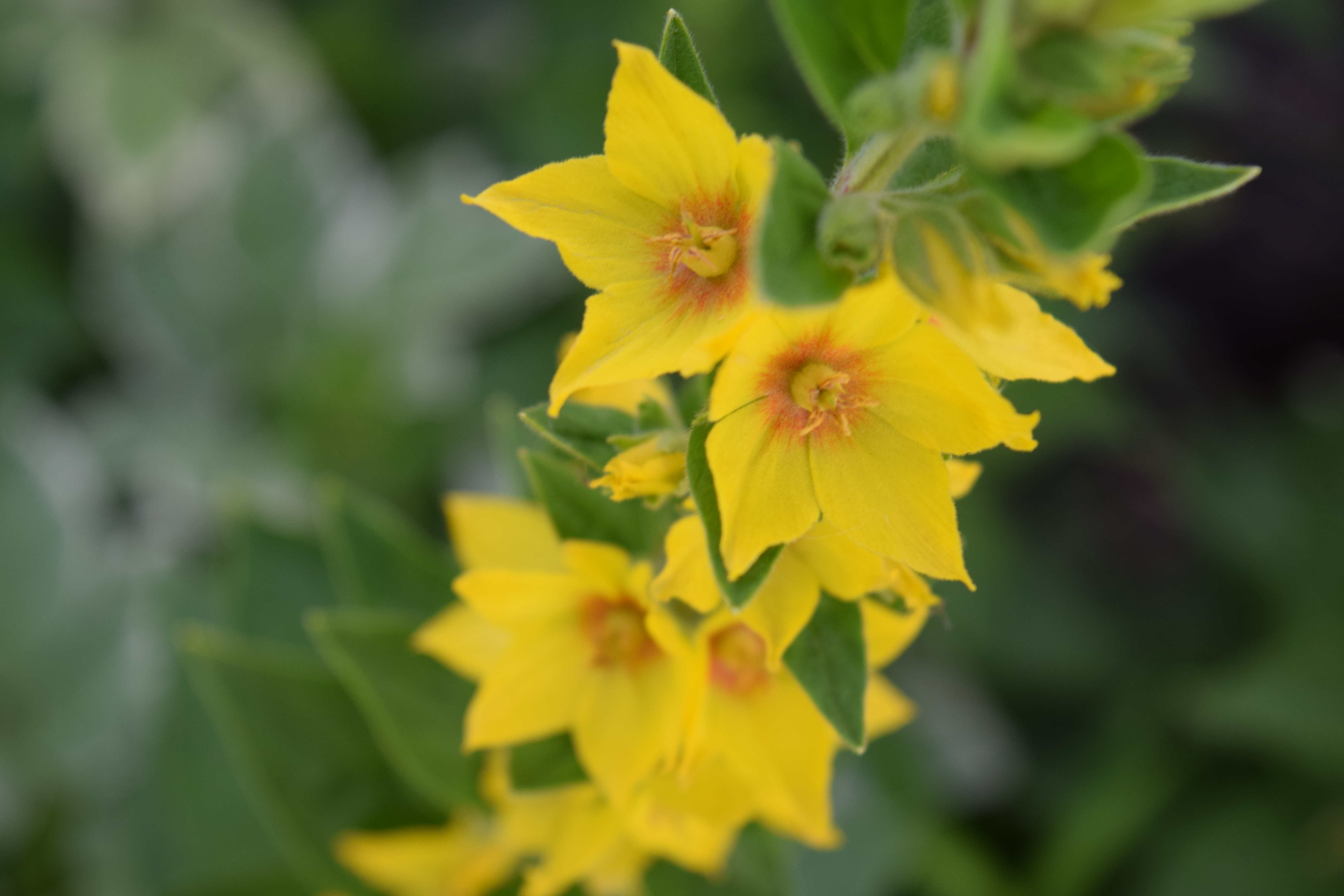
Yellow Loosestrife

Yellow Loosestrife

Torch Lily

Torch Lily

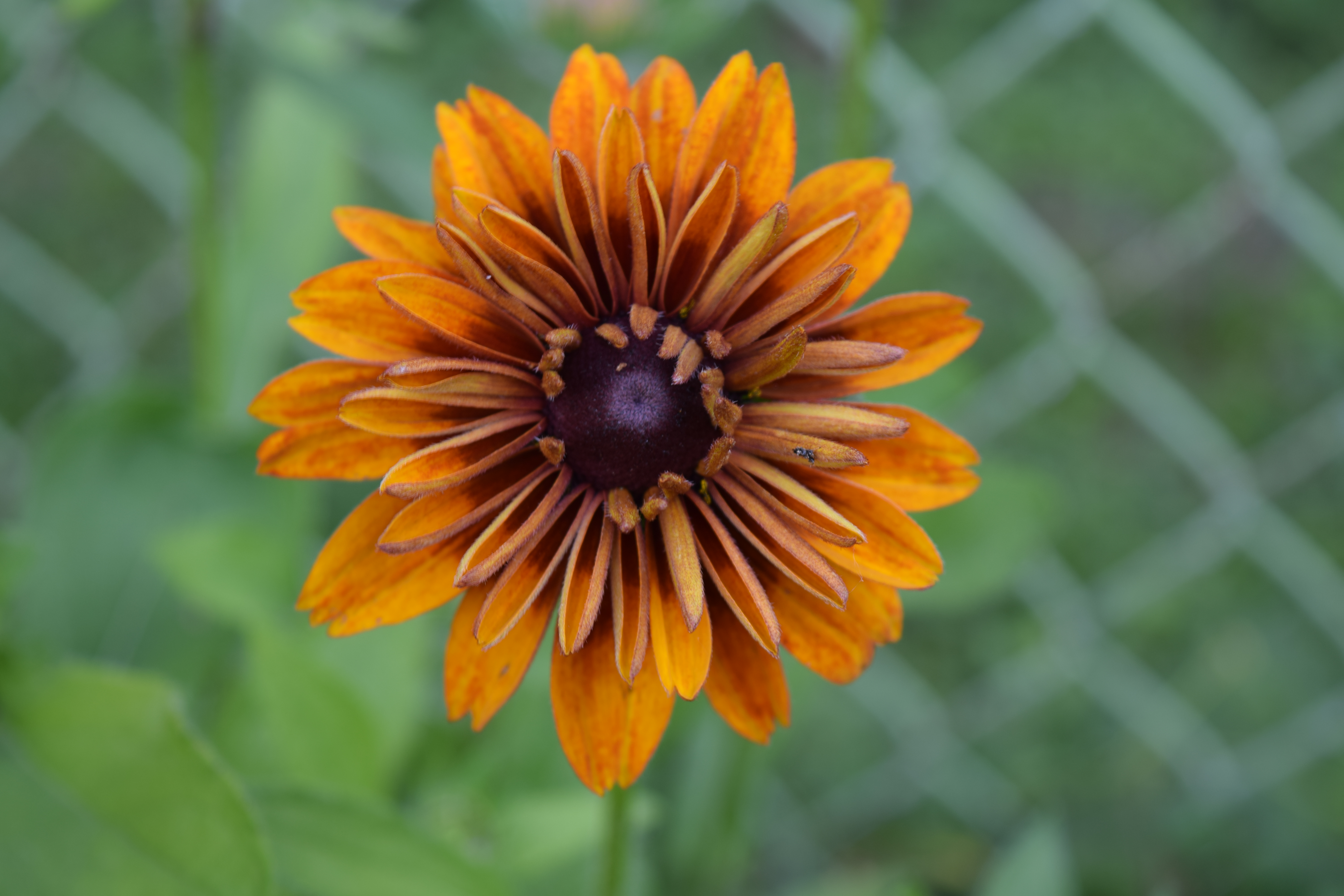
Rudbeckia

Rudbeckia

Sea Holly

Sea Holly

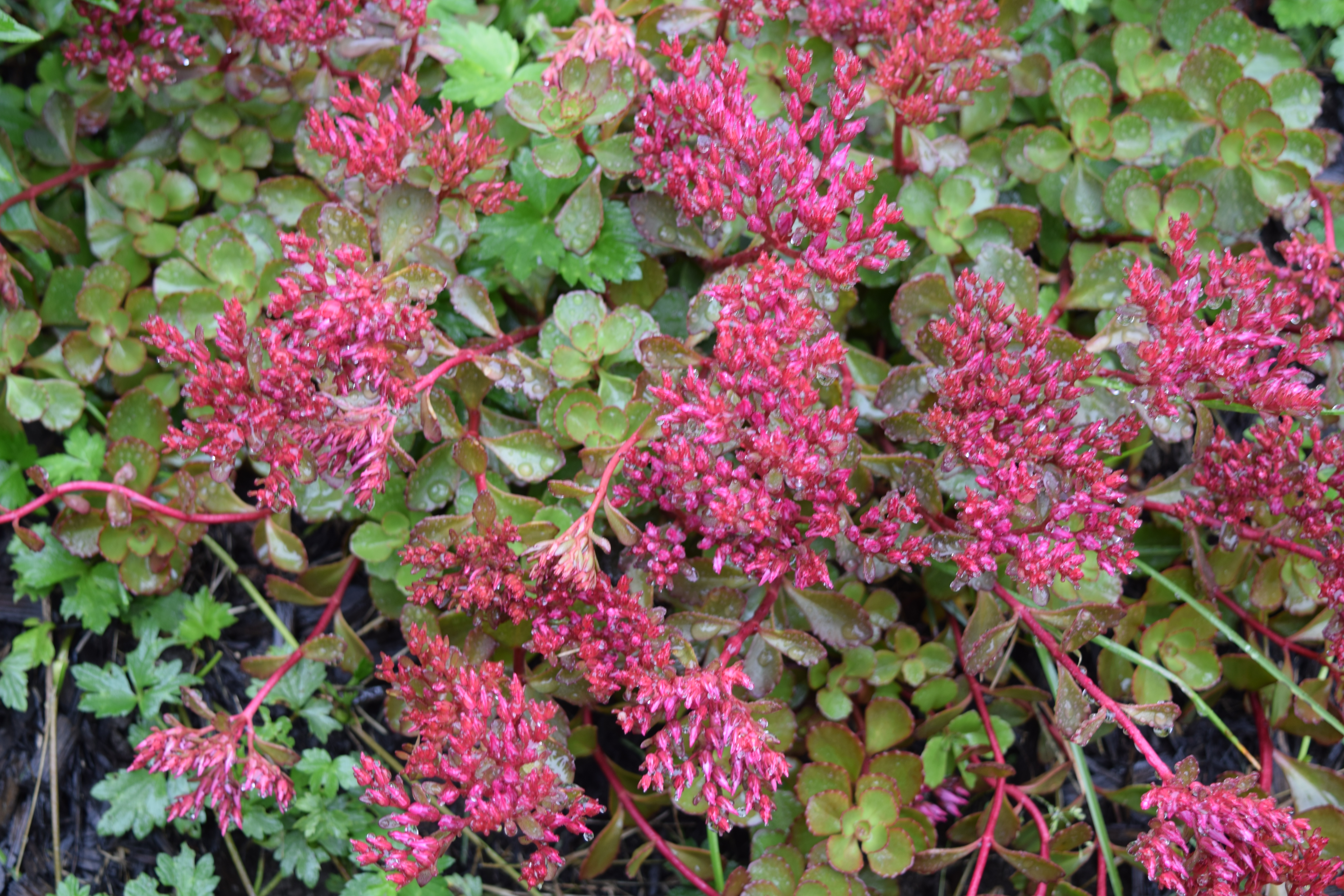
Two stone crop sedum

Two stone crop sedum

Stay tuned at a later date for some more pictures of other plants well on their way through the season. I hope that these pictures will give you some ideas of what you would like to add in your garden as well!

Have a wonderful summer week!

DIY: HIGH-PER-TOO-FA

Welcome, Summer! The weather in Buffalo has been absolutely beautiful! Everybody, including myself, is soaking up the sun as much as possible! I am getting a little behind on blog posts because now that summer is in full swing, our calendars are absolutely packed. That’s what happens in Western New York when summer comes– you use up every single minute of it!

20150509_081136

Meanwhile, I have added a couple of new plants to my garden, but next week I plan on doing a little update on new plants I have purchased, and also the other stuff that’s been growing in my gardens. I have also learned a few things.

Speaking of learning a few things– after going to my parents house a few weeks ago, I saw this really neat bowl that my mother had made. I asked what it was and she said, “Hypertufa”. I said, “What?!”

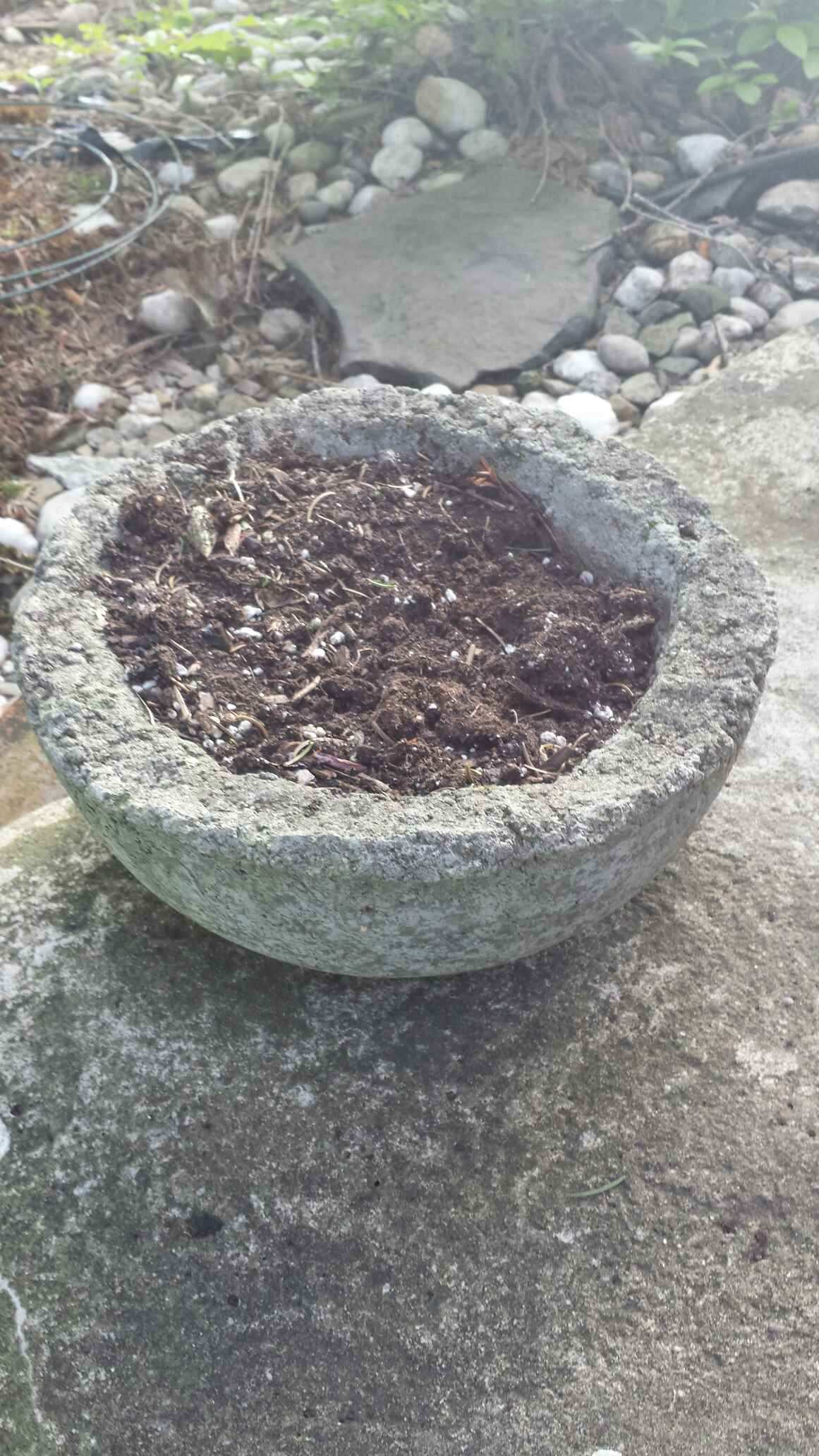
Here we go. Hypertufa is a sandy/concrete like-mixture that you make with Portland cement*. It is much lighter and porous than your typical terracotta pot or just plain old concrete, so that’s what makes it so good for growing plants in. This history behind it is really interesting. Hypertufa was invented for use in alpine gardens. It can withstand temperatures that dip to -22 degrees farenheit (-30 degrees celsius).

*This is very important. This is what makes Hypertufa different from regular garden ornaments you make out of just a mixture of sand, cement mix and water. Yes, it really is confusing.

How to make Hypertufa

If you go online you will find many different recipes, but this seems to be the most used amounts that I found:

-Three parts Portland Cement                                                                                                 -Four parts Sphagnum moss                                                                                                   -Five parts Perlite                                                                                                                     -Water

You can add sand, pebbles, or other anything you think might give your hypertufa more structural integrity, or strength.

**Make sure to use gloves and mask when using the above ingredients. The cement dust can be dangerous if inhaled in large amounts. The mixture should have a cottage cheese consistency before you put it in the mold.

  • Get two plastic bowls/molds- one big and one small so that it fits in the bigger bowl.
  • Spray the big bowl with nonstick cooking spray.
  • Once you have created the mixture, place it in the bigger bowl and mold.
  • Place the smaller bowl inside the bigger bowl. Spray nonstick cooking spray on the outside of the smaller bowl before you do so. Fill in the molds appropriately, and use a mallet to try to remove any air bubbles.
  • Put your hypertufa in a plastic bag for 24-36 hours to cure.
  • Remove the plastic molds and set your hypertufa in a dry place to finish completely drying out for 2-3 weeks.

Once you get more experience with creating hypertufa, get creative. Start thinking outside the box with it.

This will be what your finished project will look like:

20150526_192622

Photo: Colleen Dietrich

Hypertufa has endless possibilities. This is also a great Christmas gift idea. I plan on making a few of these! You can use anything! And your garden will thank you!

Make Your Own Bottle Tree

Wow! I had an extended three-day weekend, and Friday and Saturday were great!! I took my daughter to the beach on Friday, and Saturday was a playground/shopping day. I was really glad I got the bulk of my yard work done a few weeks ago, so I could enjoy an awesome beach day:

My daughter was introduced to shell and beach glass collecting!

My daughter was introduced to shell and beach glass collecting!

But since today ended up being a cold and much-needed rainy day, I started thinking about my next project– a new bottle tree. Unfortunately, the wind and rain of last fall brought my first bottle tree down with a great thud, and it was done for.

So, I am sure you are wondering, what is a bottle tree?! 

For a truncated explanation, (you can read more about the history of bottle trees here at http://www.felderrushing.net/HistoryofBottleTrees.htm), bottle trees originated several centuries ago in Africa, and the idea was brought to the United States during slavery. Bottle trees are very prominent in the Southern portion of the good ole’ USA. It is believed that the bottles that are hung on trees catch bad spirits. Now, they are primarily used as unique garden glass decor.

This is a picture of one of my mother's many bottle trees.

This is a picture of one of my mother’s many bottle trees.

Bottle trees can be expensive, but also very affordable to make, and that all depends on the avenue you choose to go down when it comes to just how fancy you would like it to be.

My bottle tree when it was seeing better days.

My bottle tree, seeing better days.

Now, there are several kits you can purchase online for $100 or up, but I suggest not purchasing those. I have heard from several people that most of those kits are metal bottle trees, and they tend to be very flimsy and don’t hold up very well.

So, this is what I recommend to you and myself, the second go-round:

Get a pressure treated 8ft. post from your local hardware, home store. They are about $12, but they will last longer than other non-treated posts.

-If you don’t want to spend that much, buy a cedar fence post from your local lumber or farm store. That was what I used for my first bottle tree. It cost me $4.

I purchased a bag of gutter spikes that screw into the post. Purchase any sort of spike available at your local hardware store. If you get the spikes that screw in, get yourself a power drill and insert them in your post. They will not rot like the flimsy balsa wood dowels that I purchased for my first tree. They will last for a long time.

-You can either shovel a hole for your tree or purchase a post hole digger. For the thrifty gardener, it might be more than you want to spend– about $25. If you would rather not go that way, just use the shovel. That what I use!

And… the bottles!

Use ANY bottle. You can buy colorful ones from discount stores, though I found my batch from the grocery store. Or, hit up friends and family, or save your wine bottles! I even used a colorful flower vase!

Bottle trees are meant to be creative, so go wild and have fun making one! They are a very unique addition to the garden! Stay tuned for pictures when I finally finish my second one!

20130908_103934

The Dirt… on Dirt

Pretty much everyone in my neck of the woods became warriors this past weekend. The proof is in the sun-burned faces and foreheads that walked into work this morning! Yes, our first weekend of warm, sunny weather was here, and that meant everyone was ready to dig in to some much-needed yard work!

I myself couldn’t wait to get out there and dig into the earth…well, what I had envisioned as earth, at least — wonderful, nutrient rich soil just waiting for me to sow and plant in it. Instead, I got a rough, dried, break apart and roll out of your hands soil that was begging for water. No matter, I did a little weeding, planted a few cosmos seeds and turned up as much of the “soil” as I could. And, I gave some much-needed water to everything!

DSC_0131

With this whole dried out dirt situation, it got me thinking — What is dirt? How many types are out there? What kind of dirt do YOU have in your neighborhood (that doesn’t have anything to do with your neighbor…)

What is SOIL?

  • Soil is a mixture of minerals, decomposed plants, and rocks. It encompasses everything from Mulch to Chalk. Depending on where in the world you live, you will most likely have soil that has more of one mineral(s) than another. You might get lucky and get the perfect ratio of all the above, which is called Loam. Loam is the ideal growing medium for all plants. Gardeners work really hard to get their soil to loamy proportions. Playing with the pH of your soil helps achieve this.
    • Clay– is made up of the smallest particles found in the earth. This makes it the heaviest and most dense of all soil. The best way to work with this type of soil is knowing when is the best time to do so. The best time to plant in clay soil is when the soil is dry. Its way too hard to work with when it is wet. (Remember grade school?)
    • Silt — has a chalky feel, but is definitely easier to work with than clay. Because silt has mineral particles that are so fine, you can compact it easy and it holds water in. It’s a good mix between sand and clay. The downside is that because it holds water so well, it could hurt your plants by not getting enough air to the roots to dry them enough to grow.
    • Sand — sand is made up of large mineral and rock particles. While it’s not the most desirable soil to plant in, all is not lost if this is the type of soil in your neighborhood. Cactus and other plants that survive drought-like conditions thrive in sand. You can add mulch to your soil if its sandy to keep moisture in, since sand does not hold water well.

Every type of soil I have described above can be enhanced to be the ideal growing medium by adding compost or mulch to help with the growth of your plants. The first step to success in gardening is finding out what type of soil you have around your house. After that, you do what you have to do get the best “dirt” in your neighborhood! You know what I mean…

How I Keep My Stinking, “Deer” Friends Away for the Summer

My first flower from the bulbs I planted a couple years ago!

My first flower from the bulbs I planted a couple years ago!

Spring has officially sprung! What a great weekend this has been! The sun is shining, its warm, and the Adirondack chairs have made their place out in my back yard! It’s been so great to get the raking done in the yard. I have been a “weekend warrior” of sorts, and now I am ready to crash! But before I do, I wanted to follow-up with where I left off when the snow really started to fly. Yes, our friends, the deer. In January, I explained how you keep them at bay during the winter, by covering up everything that means a lot to you in your garden.

Now the spring/summer season is a little different. You don’t cover stuff in the warm months, so here is how you can keep your gardens looking super lush and beautiful, while your neighbors get all chewed up (true story hehe)….

When I first started noticing that more and more deer were making their home in our neighborhood, particularly my yard, I needed to find out what I could do, without harming them, that would be a deterrent. So, I went to my neighborhood farm store and picked up a couple of different formulas: “Deer B Gone”, and “Liquid Fence”. Both were two different formulas that worked great. Deer B Gone is a formula of eggs and cinnamon and a couple of other spices, Liquid Fence contains eggs and smells awful at application, but once it dries, it does not stink. There is also blood meal, but that smells atrocious, and your neighbors don’t appreciate you much after applying that. No matter, these products work, and you should consider them as part of your “deer be gone” routine.

However, when it’s the peak of the growing season, and you have lots of plants like I do, deer repellents such as these can end up costing you a fortune. One bottle of each of these formulas cost at least $15, and to make sure I covered everything I needed to, I could go through one bottle in just one evening! If you have a small garden, then buying natural solutions are the way to go for you.

So, I was now on the hunt for a homemade deer repellent that was all natural and would save me lots of money. I just happened to be reading one of my gardening magazines that said eggs and water were all you needed. With a few other tips, you will have your neighbors jealous that your Hostas look great and theirs have been eaten down to the stem.

Here you go, tips to a beautiful garden all summer long:

  • Make sure your concoction STINKS — No, really, deer HATE stinky things. Eggs give off a scent that the deer absolutely hate.
    • Other things to consider for your egg and water solution or to use alone include:
      • Cinnamon
      • Cloves
      • Essential Oils
      • Pepper Spray (THANK YOU to one of my readers who told me about this)

There are several different recipes that include different amounts of eggs and water, but this is the one I have been using, and I really don’t have an exact amount. I just make sure I have more water than egg in the solution so it goes on easy and doesn’t end up making a sticky, staining mess. And, it also doesn’t stink with it more parts water than egg.

1. Purchase an empty utility spray bottle from the hardware store.

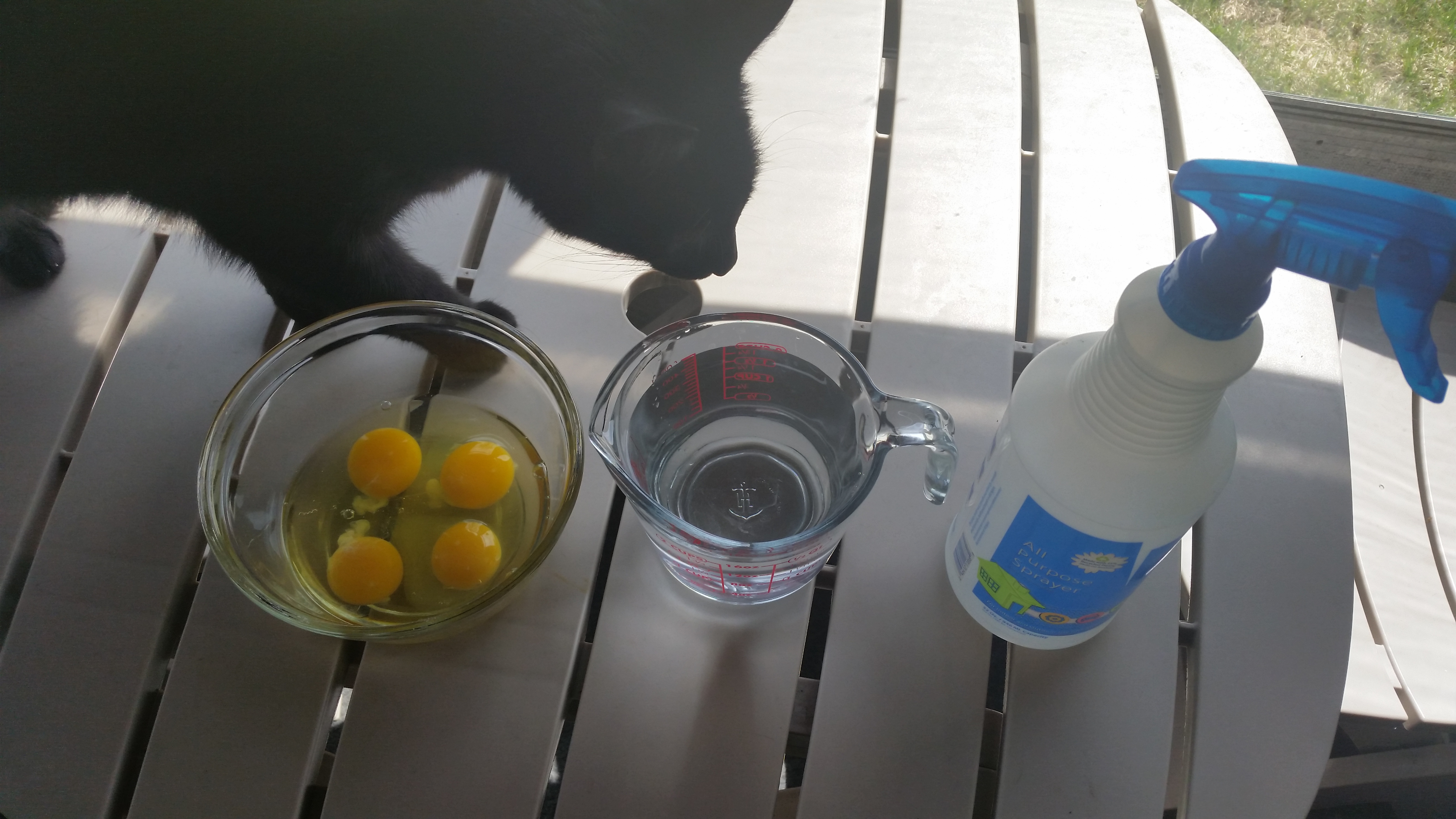
My cat, again, always has to know what it going on.

My cat, again, always has to know what it going on.

2. Get four eggs and a quart of water.

20150413_141632

3. Mix them together with a blender. This is the best way to get a smooth mixture. 

20150413_141944

* You don’t need to use this exact amount. There are several different recipes on the internet. Whatever works for you is best. Some VERY IMPORTANT TIPS you must take into consideration:

-Deer get used to your routine. Try to change up your solution after a month or so. For example: I will go with just eggs and water for the first few weeks, and then I will put cloves in for the next month, and the cinnamon the next.

-The peak of summer means you will be spraying your stuff A LOT. The faster the stuff grows, the more you must apply your solution. Again, this all varies, depending on how bad you have deer in your neighborhood. You may be just fine with a once a month application, whereas, for my neighborhood, I was doing it once a week for a little while. They usually stay away for a month or so after you spray.

Other deterrents not in liquid form that work include:

-human hair- pieces of human hair = predators                                                                       -your dog- they scare away predators                                                                                     -hanging bars of soap                                                                                                             –motion lights, or sounds of animals

It’s a lot of work, but worth it to keep the garden you have invested so much time and money into looking wonderful for the whole growing season!

It’s Finally Spring — Now to Survey and Assess…

What a wonderful Sunday it was! And today is even better! Western New York has been waiting a long time for this weather, and we aren’t wasting any time getting outside! I took my daughter on her inaugural trip to the playground yesterday, and ice cream after made it the perfect Sunday afternoon.

20150412_154924

20150412_114631

I have heard everybody say that now that the weather is finally nice, they can actually take down their outdoor Christmas decorations! So sad, but true. The winter really kicked our butts!

Now that winter is in the rear view mirror, we can look ahead to the warm weather and the great things that come with it. However, one thing that I don’t look forward to during the spring is taking a look at my flower beds and seeing the damage that winter and animals have done with it once the snow melts.

So, I sucked it up yesterday and went out in my back yard, as well as the front yard. Overall, I am happy with the results. Some things I lost,which I had predicted and others have pleasantly surprised me.

As I had mentioned last month, I knew my arborvitae had bitten the dust. Well, they did, fabulously.

DSC_0125

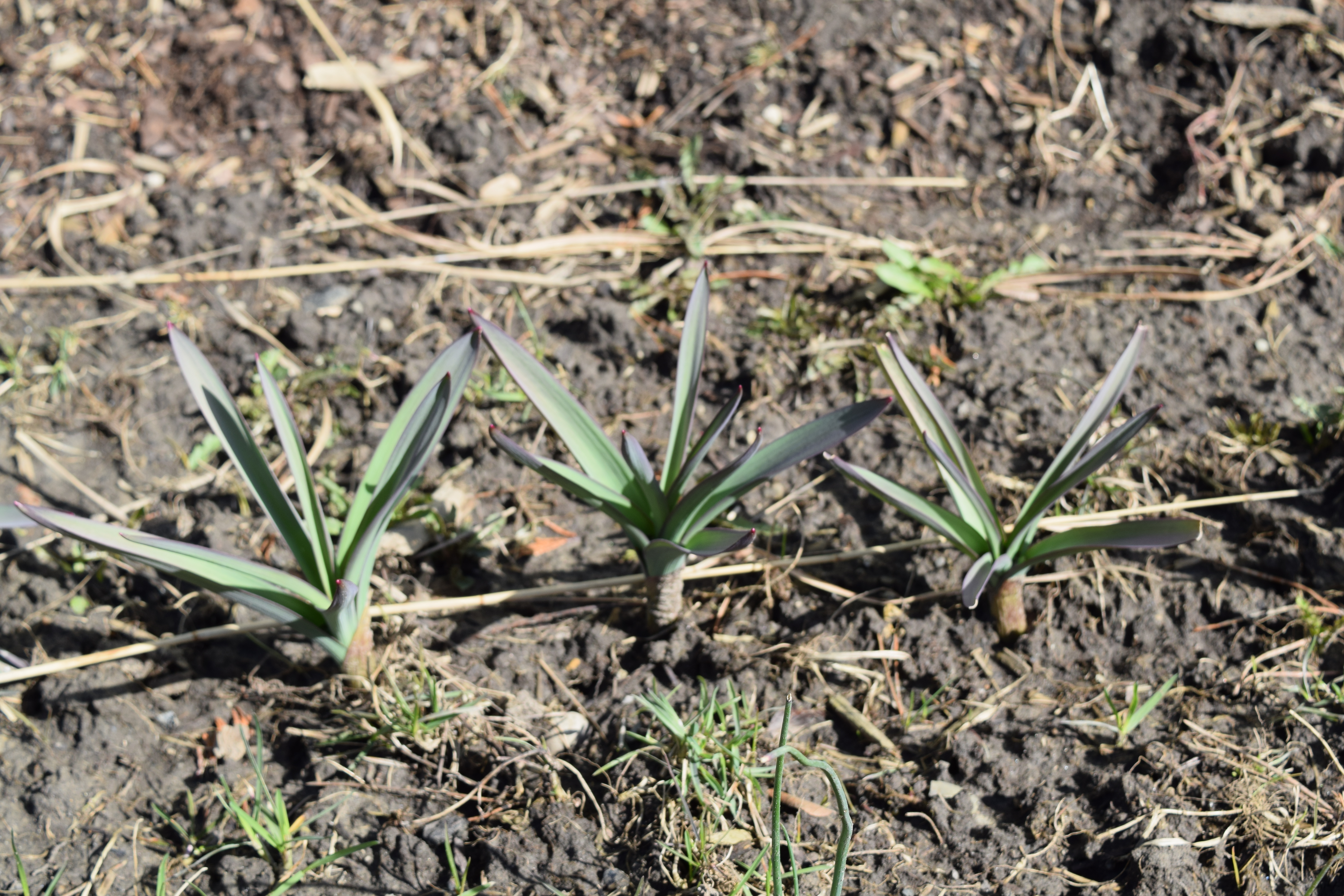
But despite this, there are signs of life everywhere, my tulips are coming up, and the Alliums I planted last fall.

DSC_0120 DSC_0121

So, what am I going to do with the damage I found?

  • I am going to ditch the arborvitae. In retrospect, it probably wasn’t the best location for those shrubs. I think I am going to get two more boxwood bushes that I already have next to the arborvitae now. Boxwood are a very common shrub used for edges, borders, etc. You can trim and shape them to your liking. They have worked well for me, and continue to grow. So, boxwood it will be!
Boxwood are commonly used for borders. Deer do not seem to bother these, which makes them even more ideal for your landscaping!

Boxwood are commonly used for borders. The deer do not seem to bother these, which makes them even more ideal for your landscaping!

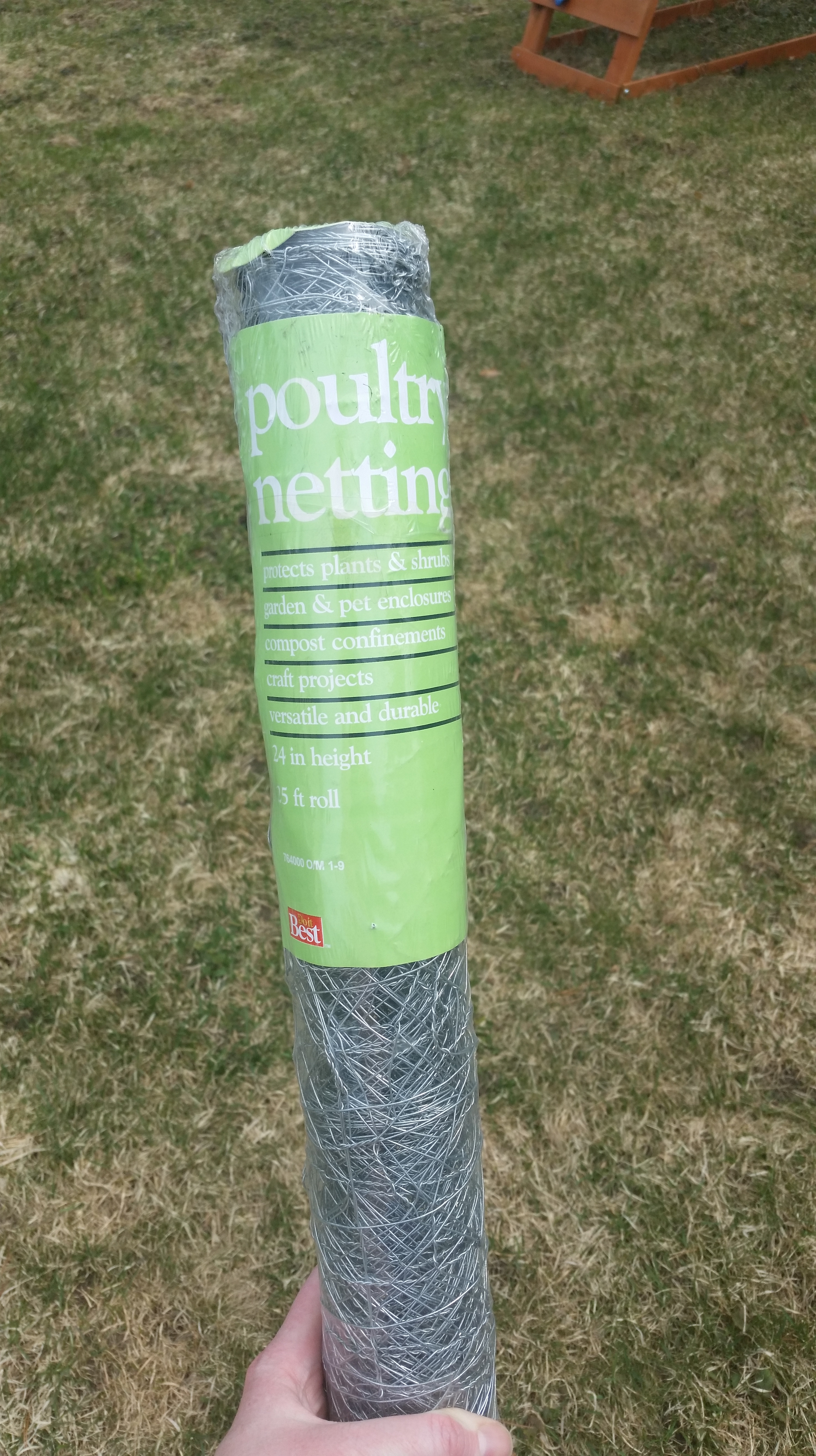
  • A lot of my damage has also come from the deer that have parked themselves out in my backyard. I am putting new chicken wire around my raspberry bush, and I need to protect my dwarf burning bush that I planted last year as well. I also have an egg and water concoction that I am using for the spring/summer. More info to come on that subject…
Chicken wire is a savior for plants when it comes to animals, in particular, deer.

Chicken wire is a savior for plants when it comes to animals.  In particular, deer.

So, overall everything is coming along just fine. I planted a lot of new stuff last year, and it looks as though I will be seeing them again this year. I found some new bulbs and seeds that I am going to try this year as well, so I am crossing my fingers I will get something this year!

How did your garden fair this winter season, even if you didn’t get any snow? What do you need to do in order to get your garden the way you want it? Time to assess your gardens before the growing season is in full swing!

Winter and the Garden : A Damaging Tale

I don’t know anybody who isn’t ready for spring at this point. I love all seasons, but I am getting really worried about winter and what it’s going to do not only to my house (ice dams) but my plants! I fear that being buried under 4 feet of snow is going to result in some major damage. From what I can still see, I have some major Winter Burn, and I already know I have lost quite a few plants. I think it’s pretty safe to say that I have my work cut out for me as soon as the snow melts!

20150131_112106

So, let’s start with the basics so we can get a better understanding of typical damage done to our gardens due to winter, and the approach we should take with each of these perils.

Ice and Breakage:

Depending on what part of the country (or world) you live in, many people are have experience some major icing that has coated the trees and shrubs in your yard. Ice is the most damaging and most dangerous winter peril, in my opinion. So what if you have a tree with broken branches in your yard? Unless it is a major danger to you and your house, DO NOT try to prune it. Pruning a broken branch or shrub with ice on it could cause more damage to the plant than you think. Wait until spring to start cutting it back to stimulate new growth.

Winter Burn:

This has also been referred to as desiccation. Evergreens are the most susceptible to this, including my own Emerald Green Arborvitae, which I have mentioned in my posts before. I had purchased two small arborvitae in the Fall of 2013, and I noticed this fall that the one had turn completely brown, as if it were dead. Winter Burn happens when the plant has not received enough water in the fall to sustain itself through winter. And interestingly enough, your plants don’t stop losing water during the winter, either. You can try to see if it will come back on its own, or you can just remove it during the spring. Even just a regular winter takes a lot out of your plants. I have said this before, I know my biggest weakness with my garden is not watering enough. Another lesson learned! 

Animal Damage:

In the past, I have mentioned my never-ending struggle with my “deer” friends. Deer aren’t the only ones to cause some major damage to your landscape. Rabbits, moles, voles and mice can also do some work on your plants. The only thing you can do with animal damage is just wait let it go and allow for nature to heal itself, and prepare better the following year by covering and fencing in the plants you know animals like to target.

Snow:

As I have depicted many times, most people in the Eastern US are dealing with historic snowfall and sub-zero temperatures.

This is the coldest I have ever seen it in the Buffalo  Metro area.

This is the coldest I have ever seen it in the Buffalo Metro area.

With over 4 feet of snow in your yard, you cannot do anything to help your plants. In fact, trying to help them with that much snow will only harm them. Your perennials that go dormant every year should not be harmed at all, even if they are buried in snow. It’s really hard to harm a plant that has established itself in your yard. Don’t worry about what you can’t control–it’s not worth it.

For the most part, there isn’t anything that cannot be fixed in your garden without a little time and patience when spring comes. “Live and Learn” comes in to mind when you are experiencing a particularly brutal winter, as most of us are this year. None of us have even come close to dealing with weather like this before, so the more we learn this year, the more we will be prepared for the next bad winter!

The Need for Seed and Other Musings – The January Wrap-Up

Here it is, the last week of January is upon us. We are pretty much half way through winter, so lets hope the ole’ groundhog gives us a break this year and predicts that spring will come early! By this time of year, we are all getting cabin fever, heck even my daughter is getting sick of riding her new bike around in circles in the basement. She’s ready for the rubber to meet the road!

After a wild and crazy Saturday night of learning to ride our new bike, it's finally time to take a rest.

After a wild and crazy Saturday night of learning to ride our new bike, it’s finally time to take a rest.

It’s also time to  check in and see if I am practicing what I preached way back when the snow started to fly. Well, I am very proud to say that I am now underway. So here’s a little round-up of what’s been keeping me busy in my world.

1. I am looking at seeds.

I am sure most of you have had your mailboxes inundated with seed catalogs like this:

20150125_180348

Yes, now is the time to purchase your seeds to get a jump-start on your growing season. Whether you are going to start your veggies, herbs or some of your favorite flowers, this is the perfect time to purchase them. Why? Because the stores and nurseries are freshly stocked and you will get everything your little heart desires!!

20150125_155446

2. I have been putting the pen to paper.

I love words. My life’s work is putting pen to paper. I do it in my job, but I have also been journalizing since I was very young. I currently have four different journals. One of those journals is my garden journal. It has all my musings in regards to my gardens, yard and what I want to do with it all.

Nothing better than a Moleskine. Or two.

Nothing better than a Moleskine. Or two.

3. I purchased some new books.

I remember a time, oh, about ten years ago, when all I did was work, exercise, and read. My love of words never died, it just went on vacation for a few years. I could read at least a book a week at one time. Now, it’s one a year! That’s life for you! But now, things are changing where I can now devote more time for reading and researching than I could before. My time management skills are getting much better the older I get. So, I have some really great books that I will review in the not so distant future, and I am excited to dive in to them.

20150125_180615

4. I am getting dynamic inspiration.

This was the year I promised I would get back to being “me”. I took a few years off of being “me” to devote fully to being “mommy”. Before I became a mother, I always worked towards being dynamic. I always wanted to know a little bit about most things just so I would always be able to carry on a conversation with anybody I met. This thinking too, has contributed to the inspiration I get for gardening. It’s amazing the cool things you can think of when you look at the bigger picture!

5. I have been getting outside.

Yes, I have been able get outside a lot more than I have in the past few years, and it has made an incredible difference. I feel more at peace, and get such great joy with walking about the woods in snowshoes, cross-country skiing, or even walking. It’s amazing the effect nature has on you.

So, I guess that’s it in a nutshell. Just a little bit of what I have been working on, and hopefully it will all translate into a great, inspirational, and productive growing season!

Houseplants, Part Three: Tropical and Other Unique Plants

I hope everyone had a wonderful week! It was the coldest week yet for this winter in Buffalo. Sub-zero wind chills and single digits for a good portion of the week made the temperature in the teens that we experienced the other day feel down right balmy!
Brrr! Icy cold was everywhere!

Brrr! Icy cold was everywhere!

We had a nasty lake effect band come in the wee hours of Friday morning, dumping 9 inches of snow at my house, and more in some other areas. Work was delayed until noon, so I took advantage of the situation and went snowshoeing in the rare, yet precious powder we get around these parts! There were great examples of winter interest all around me:

20150109_100327

The way the snow was on this tree reminded me of zebra stripes!

The way the snow was on this tree reminded me of zebra stripes!

Grateful for this perfect cold and snowy morning!

Grateful for this perfect cold and snowy morning!

20150109_103124

I finished up the weekend by cross-country skiing, and sadly, my binding broke on my ski and I wanted to cry. Those were my dad’s skis, and even though the bindings are ancient in technology terms (the skis I am using are close to 30 years old), those have been the only skis I have ever loved and used so much! Hopefully, all I have to do is get new bindings.

While I must say people thought I was crazy because I went out this weekend, the wind was really bad, at times visibility was zero — yea, they were probably right. But when I got back in the house, I was in for good. I thought I better do my weekly watering of my plants. And then I saw this:

My cat Leo has supernatural leaping abilities, and way too close for comfort to my amaryllis!

My cat Leo has supernatural leaping abilities, and way too close for comfort to my Amaryllis!

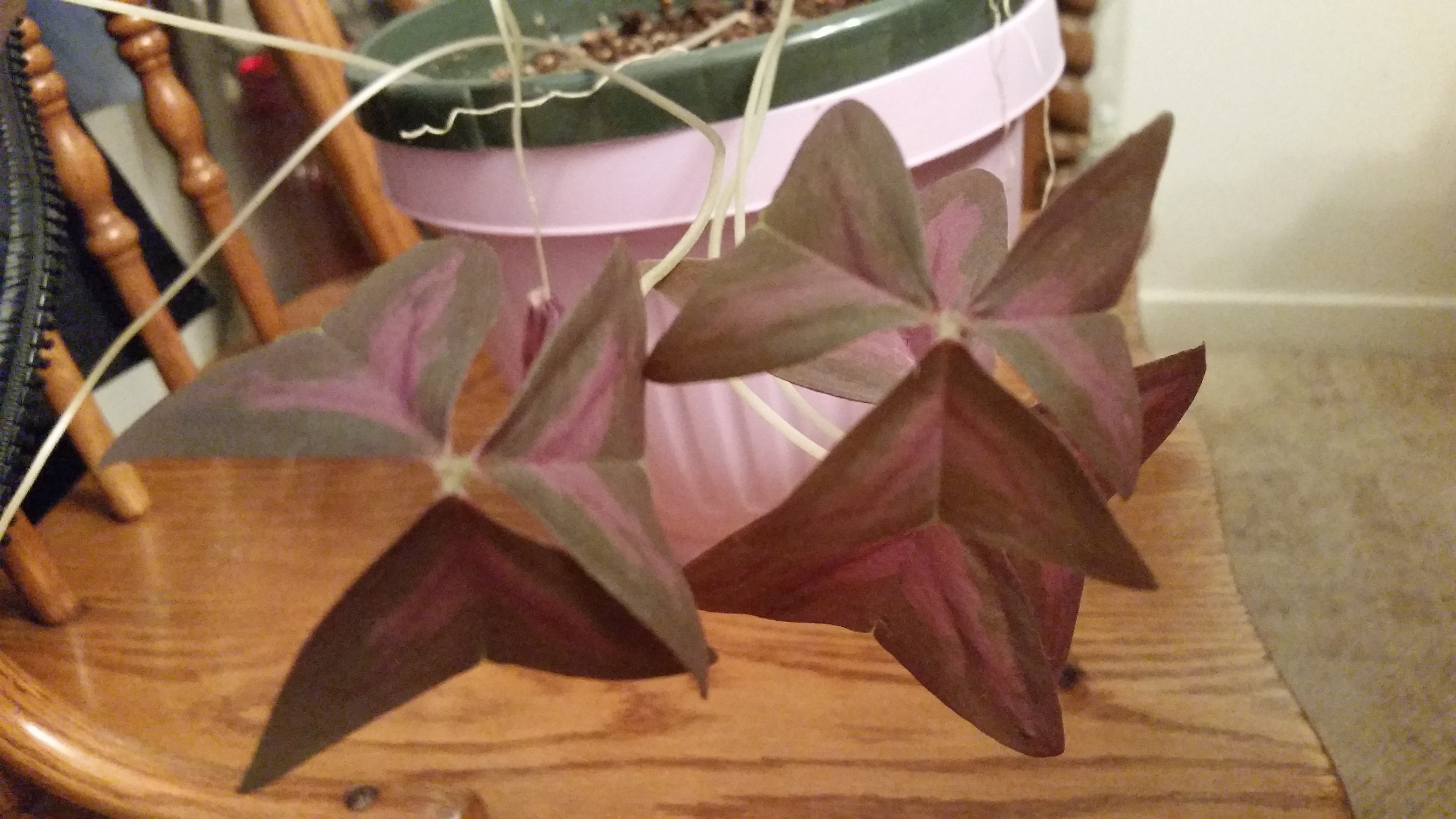
This reminded me of the time my beautiful, unique plant called the oxalis was nearly destroyed by my other kitten, Teddy. I was horrified to see it in such awful condition after coming home from work one warm and sunny summer afternoon.

20141229_164724

What is an oxalis?

  • It is part of the clover family, or false shamrocks.  They refer to this particular plant as the “three-leaf purple shamrock.” My daughter calls it the “butterfly plant” because of the petals looking exactly like a butterfly. I was first introduced to this interesting plant by a co-worker. I had asked her what it was, and she said she didn’t know, but it looked like butterflies to her.
  • There are over 900 different species of this plant. You can actually plant this one outside, too!

A couple of months later, I am perusing the Farmer’s Market in downtown Buffalo, and lo and behold, there it was! I asked the fellow working at this particular tent what it was, and he told me. I just had to get it! It was in a lot better condition than it is now, but I am happy to report that I have nursed it back to life. Little by little, just by watering it on a regular basis, it is starting to get bushy again.

This is a great addition to your houseplant collection because not only is it different, but it gives a burst of color to the sea of green that is common among your houseplants. It’s a talking piece, which is something I definitely like. I love looking at the expression on everybody’s faces when they see something and ask, “WHAT is that?”

Just like when I show people this plant:

The pitcher plant is a carnivorous plant.

The pitcher plant is a carnivorous plant.

20140720_092735

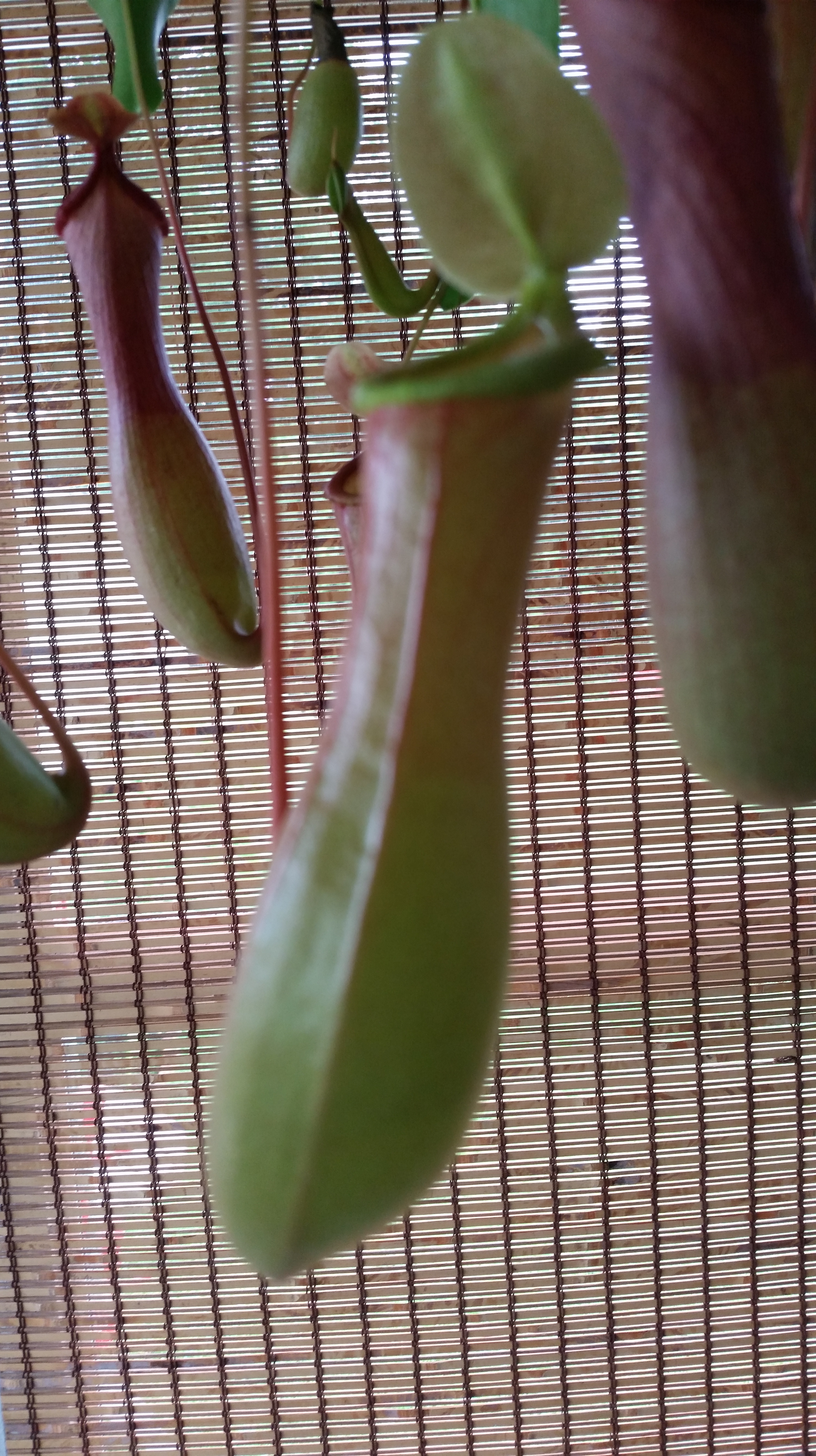
This a Pitcher Plant. I squeed with joy when I went into my local supermarket (that boasts a great selection of houseplants, I must say) over the summer to find the exact plant I was going to purchase online because I couldn’t find it anywhere!

The Pitcher Plant:

  • Is a carnivorous plant just like the venus fly trap, meaning, they eat flies and other insects.
  • They “trap”insects in the “pitchers”, the leaves which are commonly known as “pitfall traps” filled with liquid.
  • There are several different kinds of pitcher plants.
  • This particular pitcher plant is tropical. They need warmth and need to always have moist soil.  I put my pitcher plant out on my enclosed patio for the summer, and bring it in to my bedroom the cooler months.

I have to admit, this has been much easier to take care of than I thought it would. Just watering it regularly and keeping the soil moist seems to be the trick. That, and because my bedroom is one of the warmer rooms in the house, it may think it’s in its native tropical setting.

*Not all species are tropical. You can find some of these in bogs in North America!

This is a GREAT plant to add to your collection. It is so unique and adds some real jazz to your home decor!

Here are just a couple of good examples of some different plants that add great value to your house. I have a few more that I am going to single out in future posts, but for now, hopefully these will give you some ideas on trying something different to keep the long winter days full of color and excitement!

Houseplants, Part Two: The Common Ones

Happy New Year! I hope everyone had a safe and wonderful New Year! It’s a new year, and a new perspective on life! I am happy to say that I have already checked a few things off my list that I told myself I was going to do this year. One of those things includes a renewed sense of appreciation for fine art pieces:

20141230_123757

My daughter’s picture of a kitty brightens my days in the cubicle…

Anyway, I am posting a day early because I will be going out-of-town to my parents tomorrow to FINALLY celebrate Christmas. With my daughter sick last week, and the weather horrible today, we had to scratch plans until tomorrow. And something tells me my work schedule is going to pick up pretty quickly this first week back, so, again, I am prioritizing.

I have spent more time inside than I have wanted to this past week. The weather has been so awful (bitter cold, wind, snow), I haven’t even entertained the thought of taking my workout outside. So, this has allowed me to prepare for my post this week on common houseplants! In fact, I watered them all today, and already have a couple of more in mind I would like to purchase.

With that being said, here are some common houseplants I have in my home that would be good for you.

1. Snake Plant— the snake plant is the best plant for forgetful people. It’s part of the succulent family and tolerates neglect. Snake plants love to be left alone. I water mine about once every two weeks. It doesn’t need a lot of light or water, and it grows just as well.

The Snake Plant is the non-plant person's best friend! Low maintenance living decor!

The Snake Plant is the non-plant person’s best friend! Low maintenance living decor!

2. Green Dracaena— can be recognized with white stripes on their leaves. They grow upright and need medium to bright light. I water mine once a week, and even a little more during the winter months. I purchased mine at a home improvement store and it done very well for me.

20141229_164048

3. Pothos— This is probably the easiest to recognize.  They have this beautiful marbled look on their leaves. I have about three of these. I have purchased all of them from my local grocery store. It’s a vine that is extremely low maintenance. There is no such thing as too little or too much light for this vine, it grows in any lighting condition you give it. I have had one of mine for at least 6 years, and in the early years when watering my plants was not high on my to-do list, my pathos weathered that ugly time and have flourished for me.

20141229_164941

4. Philodendron — I also have a few of these, and they have a tendency to get confused with the above pathos. They too, are not fussy about light, and will grow through neglectful times. The philodendron has heart-shaped leaves, and my one also happens to be very long– about four feet. They are the number one most common plants in any indoor gardening setup.

20141229_163950


5. Peace Lily — This was the first plant I got when we moved into our house. It’s been in my bedroom ever since. The Peace Lily gets these beautiful white flowers on them about once a year, and they too, are very tolerant of low light and low humidity.

20141229_164113

6. Ivy— I believe this is English Ivy, but I have to still research it. This is actually part of the Ivy that grows outside. I took a shoot off two years ago and put it in water in the house. It has grown very well, surprisingly. Because the last time I purchased an Ivy, it died right away. Again, I was younger and didn’t pay much attention to my plants, so this could very well be the reason why it failed for me. Boston Ivies are the more common indoor Ivies, and they are hard to keep going, in my opinion. I still have to figure out how to keep them alive!

20141229_165055

Some other plants to consider:

*Corn Plant— they resemble a corn-stalk and are very tolerant as well. I actually have one of these, but I didn’t get a chance to photograph it. They can take a beating and still keep going!

*Jade Plant— I really want a Jade Plant. They look very unique and grow very slowly into a tree. They love bright light!

There are still many other indoor plants that you can choose, but I just wanted to list the ones that are very common and easy to maintain. I also have some other interesting houseplants that I will talk about in a later post. For now, you have a good foundation on the basics of houseplants, the ones that are the easiest to find, and what will be good for you and your home!