The Dirt… on Dirt

Pretty much everyone in my neck of the woods became warriors this past weekend. The proof is in the sun-burned faces and foreheads that walked into work this morning! Yes, our first weekend of warm, sunny weather was here, and that meant everyone was ready to dig in to some much-needed yard work!

I myself couldn’t wait to get out there and dig into the earth…well, what I had envisioned as earth, at least — wonderful, nutrient rich soil just waiting for me to sow and plant in it. Instead, I got a rough, dried, break apart and roll out of your hands soil that was begging for water. No matter, I did a little weeding, planted a few cosmos seeds and turned up as much of the “soil” as I could. And, I gave some much-needed water to everything!

DSC_0131

With this whole dried out dirt situation, it got me thinking — What is dirt? How many types are out there? What kind of dirt do YOU have in your neighborhood (that doesn’t have anything to do with your neighbor…)

What is SOIL?

  • Soil is a mixture of minerals, decomposed plants, and rocks. It encompasses everything from Mulch to Chalk. Depending on where in the world you live, you will most likely have soil that has more of one mineral(s) than another. You might get lucky and get the perfect ratio of all the above, which is called Loam. Loam is the ideal growing medium for all plants. Gardeners work really hard to get their soil to loamy proportions. Playing with the pH of your soil helps achieve this.
    • Clay– is made up of the smallest particles found in the earth. This makes it the heaviest and most dense of all soil. The best way to work with this type of soil is knowing when is the best time to do so. The best time to plant in clay soil is when the soil is dry. Its way too hard to work with when it is wet. (Remember grade school?)
    • Silt — has a chalky feel, but is definitely easier to work with than clay. Because silt has mineral particles that are so fine, you can compact it easy and it holds water in. It’s a good mix between sand and clay. The downside is that because it holds water so well, it could hurt your plants by not getting enough air to the roots to dry them enough to grow.
    • Sand — sand is made up of large mineral and rock particles. While it’s not the most desirable soil to plant in, all is not lost if this is the type of soil in your neighborhood. Cactus and other plants that survive drought-like conditions thrive in sand. You can add mulch to your soil if its sandy to keep moisture in, since sand does not hold water well.

Every type of soil I have described above can be enhanced to be the ideal growing medium by adding compost or mulch to help with the growth of your plants. The first step to success in gardening is finding out what type of soil you have around your house. After that, you do what you have to do get the best “dirt” in your neighborhood! You know what I mean…

How I Keep My Stinking, “Deer” Friends Away for the Summer

My first flower from the bulbs I planted a couple years ago!

My first flower from the bulbs I planted a couple years ago!

Spring has officially sprung! What a great weekend this has been! The sun is shining, its warm, and the Adirondack chairs have made their place out in my back yard! It’s been so great to get the raking done in the yard. I have been a “weekend warrior” of sorts, and now I am ready to crash! But before I do, I wanted to follow-up with where I left off when the snow really started to fly. Yes, our friends, the deer. In January, I explained how you keep them at bay during the winter, by covering up everything that means a lot to you in your garden.

Now the spring/summer season is a little different. You don’t cover stuff in the warm months, so here is how you can keep your gardens looking super lush and beautiful, while your neighbors get all chewed up (true story hehe)….

When I first started noticing that more and more deer were making their home in our neighborhood, particularly my yard, I needed to find out what I could do, without harming them, that would be a deterrent. So, I went to my neighborhood farm store and picked up a couple of different formulas: “Deer B Gone”, and “Liquid Fence”. Both were two different formulas that worked great. Deer B Gone is a formula of eggs and cinnamon and a couple of other spices, Liquid Fence contains eggs and smells awful at application, but once it dries, it does not stink. There is also blood meal, but that smells atrocious, and your neighbors don’t appreciate you much after applying that. No matter, these products work, and you should consider them as part of your “deer be gone” routine.

However, when it’s the peak of the growing season, and you have lots of plants like I do, deer repellents such as these can end up costing you a fortune. One bottle of each of these formulas cost at least $15, and to make sure I covered everything I needed to, I could go through one bottle in just one evening! If you have a small garden, then buying natural solutions are the way to go for you.

So, I was now on the hunt for a homemade deer repellent that was all natural and would save me lots of money. I just happened to be reading one of my gardening magazines that said eggs and water were all you needed. With a few other tips, you will have your neighbors jealous that your Hostas look great and theirs have been eaten down to the stem.

Here you go, tips to a beautiful garden all summer long:

  • Make sure your concoction STINKS — No, really, deer HATE stinky things. Eggs give off a scent that the deer absolutely hate.
    • Other things to consider for your egg and water solution or to use alone include:
      • Cinnamon
      • Cloves
      • Essential Oils
      • Pepper Spray (THANK YOU to one of my readers who told me about this)

There are several different recipes that include different amounts of eggs and water, but this is the one I have been using, and I really don’t have an exact amount. I just make sure I have more water than egg in the solution so it goes on easy and doesn’t end up making a sticky, staining mess. And, it also doesn’t stink with it more parts water than egg.

1. Purchase an empty utility spray bottle from the hardware store.

My cat, again, always has to know what it going on.

My cat, again, always has to know what it going on.

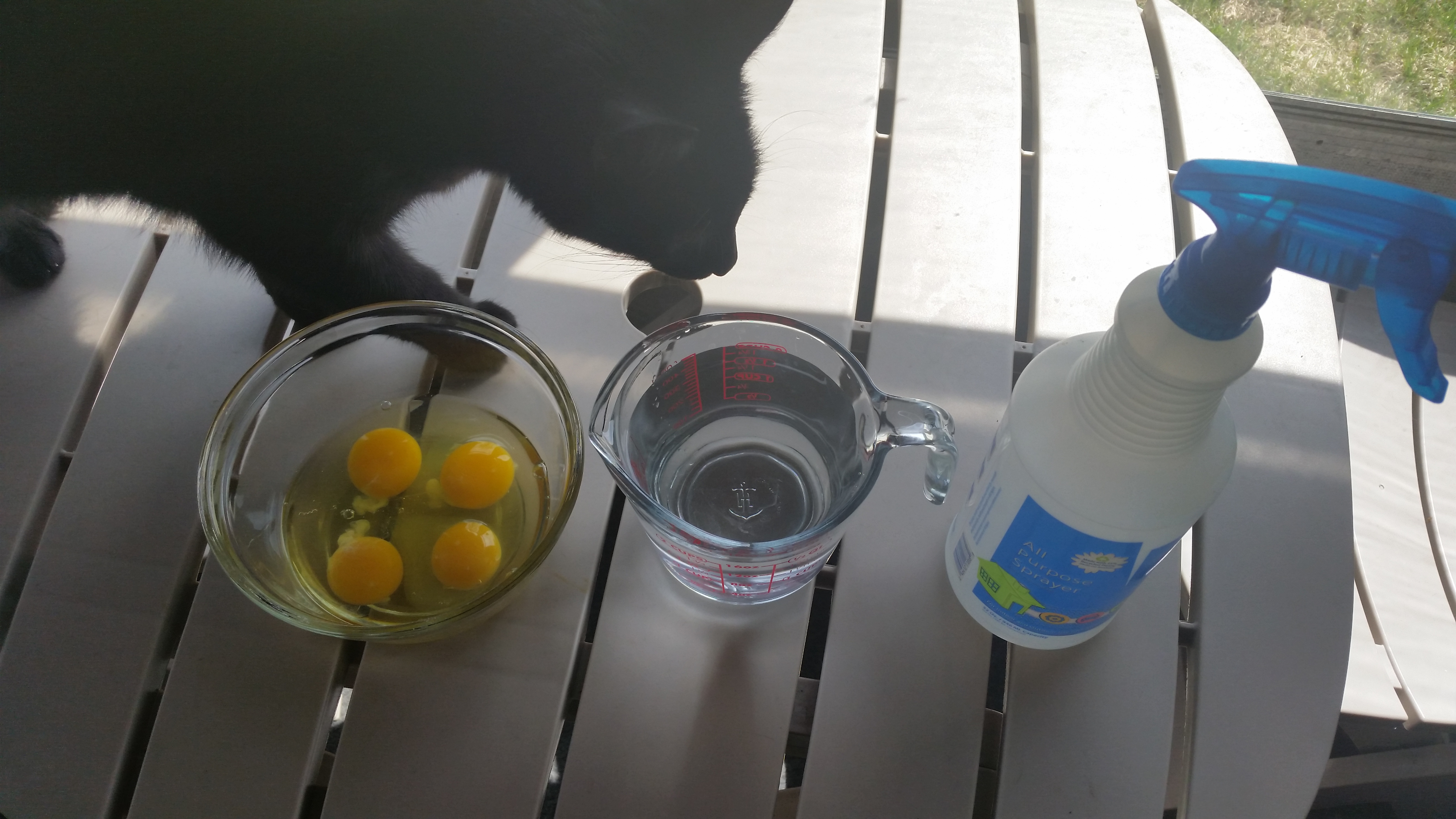
2. Get four eggs and a quart of water.

20150413_141632

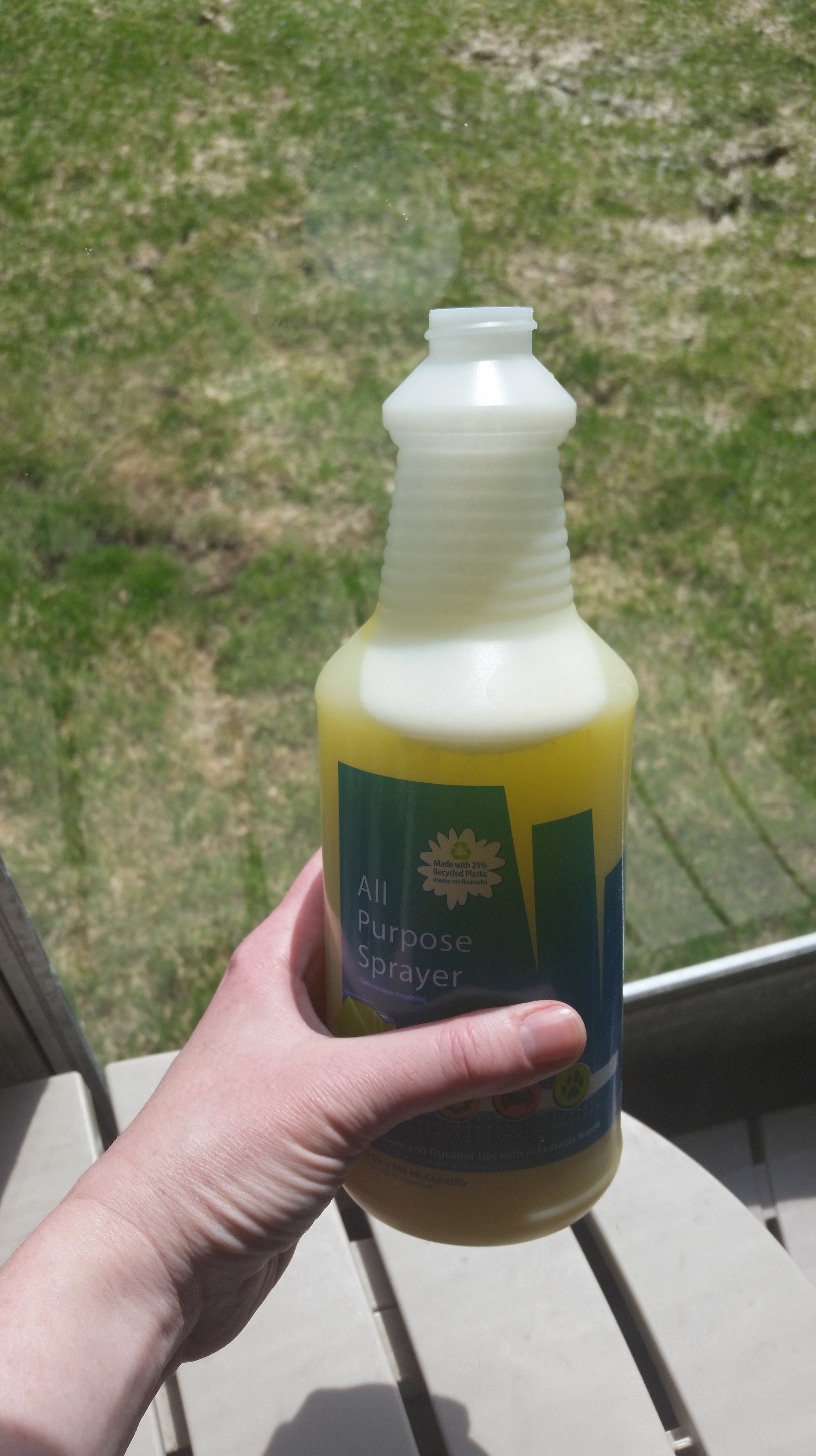
3. Mix them together with a blender. This is the best way to get a smooth mixture. 

20150413_141944

* You don’t need to use this exact amount. There are several different recipes on the internet. Whatever works for you is best. Some VERY IMPORTANT TIPS you must take into consideration:

-Deer get used to your routine. Try to change up your solution after a month or so. For example: I will go with just eggs and water for the first few weeks, and then I will put cloves in for the next month, and the cinnamon the next.

-The peak of summer means you will be spraying your stuff A LOT. The faster the stuff grows, the more you must apply your solution. Again, this all varies, depending on how bad you have deer in your neighborhood. You may be just fine with a once a month application, whereas, for my neighborhood, I was doing it once a week for a little while. They usually stay away for a month or so after you spray.

Other deterrents not in liquid form that work include:

-human hair- pieces of human hair = predators                                                                       -your dog- they scare away predators                                                                                     -hanging bars of soap                                                                                                             –motion lights, or sounds of animals

It’s a lot of work, but worth it to keep the garden you have invested so much time and money into looking wonderful for the whole growing season!

It’s Finally Spring — Now to Survey and Assess…

What a wonderful Sunday it was! And today is even better! Western New York has been waiting a long time for this weather, and we aren’t wasting any time getting outside! I took my daughter on her inaugural trip to the playground yesterday, and ice cream after made it the perfect Sunday afternoon.

20150412_154924

20150412_114631

I have heard everybody say that now that the weather is finally nice, they can actually take down their outdoor Christmas decorations! So sad, but true. The winter really kicked our butts!

Now that winter is in the rear view mirror, we can look ahead to the warm weather and the great things that come with it. However, one thing that I don’t look forward to during the spring is taking a look at my flower beds and seeing the damage that winter and animals have done with it once the snow melts.

So, I sucked it up yesterday and went out in my back yard, as well as the front yard. Overall, I am happy with the results. Some things I lost,which I had predicted and others have pleasantly surprised me.

As I had mentioned last month, I knew my arborvitae had bitten the dust. Well, they did, fabulously.

DSC_0125

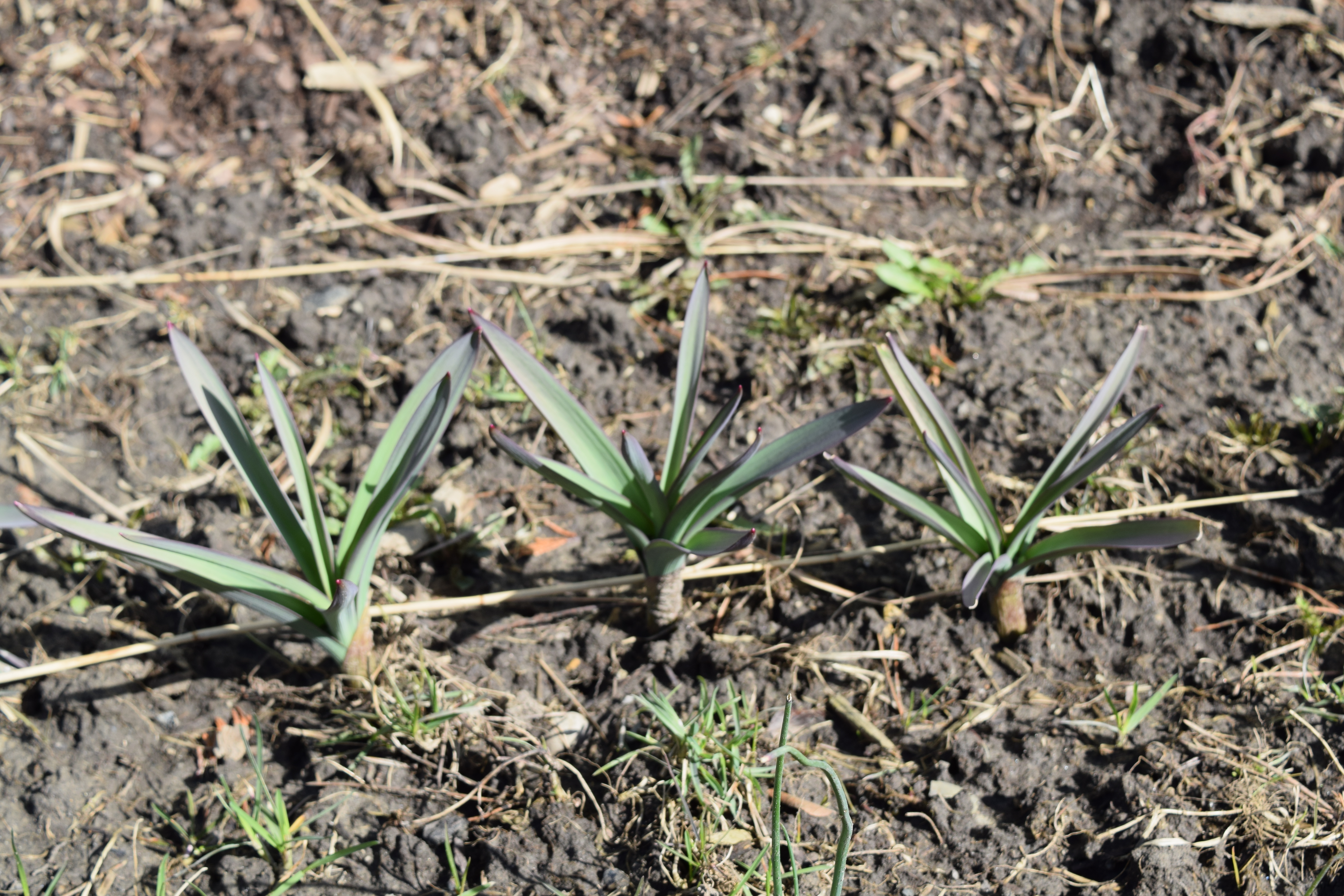
But despite this, there are signs of life everywhere, my tulips are coming up, and the Alliums I planted last fall.

DSC_0120 DSC_0121

So, what am I going to do with the damage I found?

  • I am going to ditch the arborvitae. In retrospect, it probably wasn’t the best location for those shrubs. I think I am going to get two more boxwood bushes that I already have next to the arborvitae now. Boxwood are a very common shrub used for edges, borders, etc. You can trim and shape them to your liking. They have worked well for me, and continue to grow. So, boxwood it will be!
Boxwood are commonly used for borders. Deer do not seem to bother these, which makes them even more ideal for your landscaping!

Boxwood are commonly used for borders. The deer do not seem to bother these, which makes them even more ideal for your landscaping!

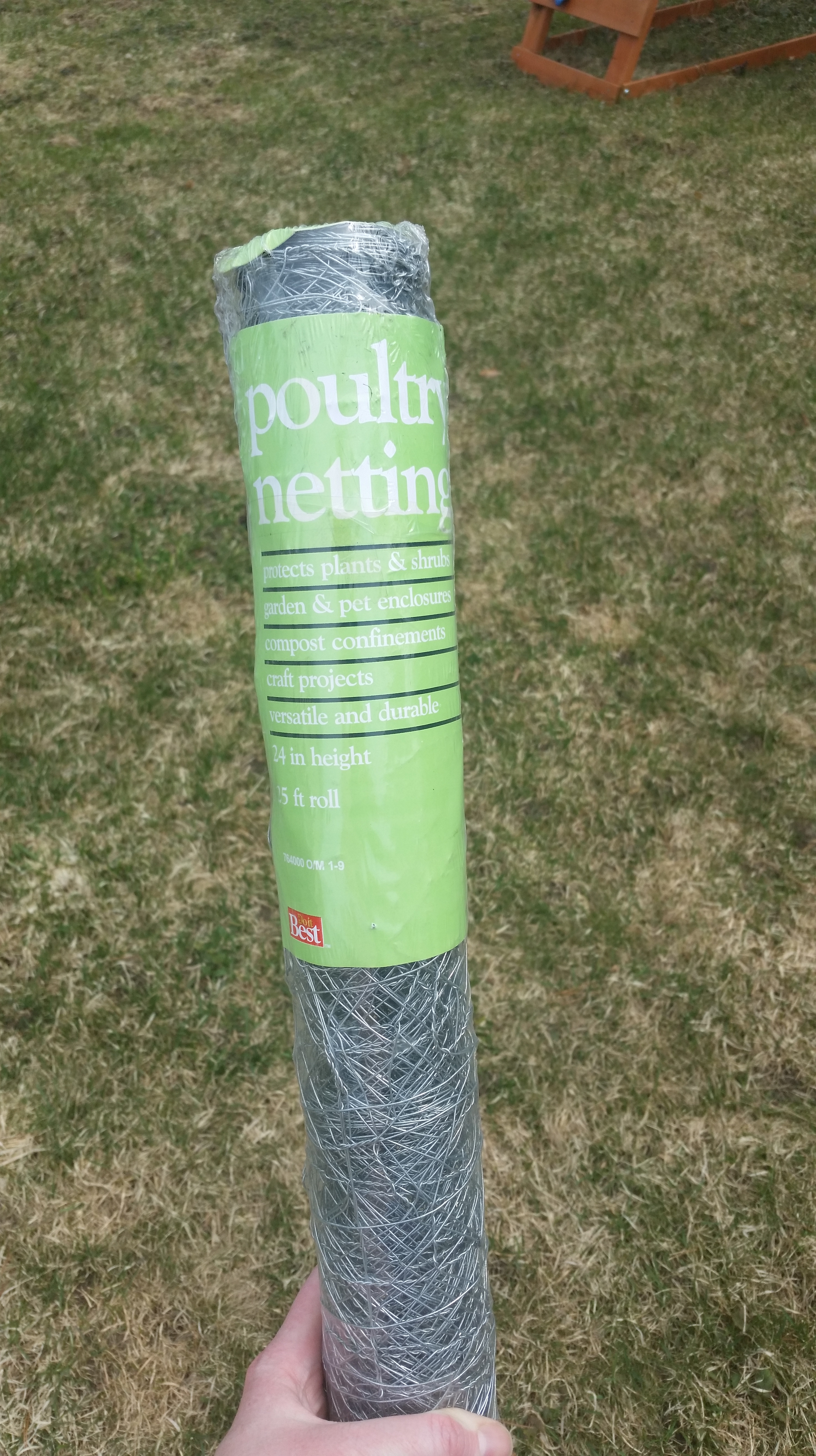
  • A lot of my damage has also come from the deer that have parked themselves out in my backyard. I am putting new chicken wire around my raspberry bush, and I need to protect my dwarf burning bush that I planted last year as well. I also have an egg and water concoction that I am using for the spring/summer. More info to come on that subject…
Chicken wire is a savior for plants when it comes to animals, in particular, deer.

Chicken wire is a savior for plants when it comes to animals.  In particular, deer.

So, overall everything is coming along just fine. I planted a lot of new stuff last year, and it looks as though I will be seeing them again this year. I found some new bulbs and seeds that I am going to try this year as well, so I am crossing my fingers I will get something this year!

How did your garden fair this winter season, even if you didn’t get any snow? What do you need to do in order to get your garden the way you want it? Time to assess your gardens before the growing season is in full swing!

Garden Planning 101

Wow! Time flies when you are having fun, right? My family has some excited things planned in the next few months– all home and garden oriented! It’s officially Spring on March 20– what do you have planned for your garden?

The daffodils at my neighbor's house are coming up-- a great sign!

The daffodils at my neighbor’s house are coming up– a great sign!

The more important question is– do you know how to plan? Here are a few quick and simple tips on optimizing your garden this growing season!

Size does matter.

Plan on getting plants, shrubs, trees that will accommodate the size of your yard. If you have a very tiny yard, you wouldn’t want to plant a tree that at maturity could be over 80 feet tall. Go to your local nursery or greenhouse and talk to an expert there that could help you with choosing plants, trees, shrubs that will fit your space. You want a happy balance with anything you plant!

Be dynamic in your garden.

When designing a layout for your garden, make sure you add taller and shorter plants, as well as some ground cover. You want your garden to have “layers”, to make your landscape look “interesting”, kind of like winter interest, but for the warm months. Aesthetics are just as important in the garden as they are anywhere else! For example, plant a dwarf plum tree with daffodils and sedum (I’m just thinking of the different layers, so these are just my examples off-hand. There are many choices). Be aware that you are planting shade plants and full sun plants in the appropriate places.

Think about dynamics in the seasonal sense– if you would like to plant-based on what blooms during the spring, summer, fall — so your beds are always blooming. I know I made this mistake a few years ago by planting a nice bed full of tulips– well, what happens after they are done blooming? Thinking about these things now makes it much easier later!

Sketch it out.

Start a garden journal and sketch out what you would like your landscape to look like, and what you would like to plant. The off-season is the time to research plants and find the right ones for your hardiness zone. Enjoy the research/design process, it’s a time of enlightenment and discovery! You will see so many beautiful plants and different ways to design your yard, you won’t know where to begin! Those, my friends, are GOOD problems.

Houseplants, Part Three: Tropical and Other Unique Plants

I hope everyone had a wonderful week! It was the coldest week yet for this winter in Buffalo. Sub-zero wind chills and single digits for a good portion of the week made the temperature in the teens that we experienced the other day feel down right balmy!

Brrr! Icy cold was everywhere!

Brrr! Icy cold was everywhere!

We had a nasty lake effect band come in the wee hours of Friday morning, dumping 9 inches of snow at my house, and more in some other areas. Work was delayed until noon, so I took advantage of the situation and went snowshoeing in the rare, yet precious powder we get around these parts! There were great examples of winter interest all around me:

20150109_100327

The way the snow was on this tree reminded me of zebra stripes!

The way the snow was on this tree reminded me of zebra stripes!

Grateful for this perfect cold and snowy morning!

Grateful for this perfect cold and snowy morning!

20150109_103124

I finished up the weekend by cross-country skiing, and sadly, my binding broke on my ski and I wanted to cry. Those were my dad’s skis, and even though the bindings are ancient in technology terms (the skis I am using are close to 30 years old), those have been the only skis I have ever loved and used so much! Hopefully, all I have to do is get new bindings.

While I must say people thought I was crazy because I went out this weekend, the wind was really bad, at times visibility was zero — yea, they were probably right. But when I got back in the house, I was in for good. I thought I better do my weekly watering of my plants. And then I saw this:

My cat Leo has supernatural leaping abilities, and way too close for comfort to my amaryllis!

My cat Leo has supernatural leaping abilities, and way too close for comfort to my Amaryllis!

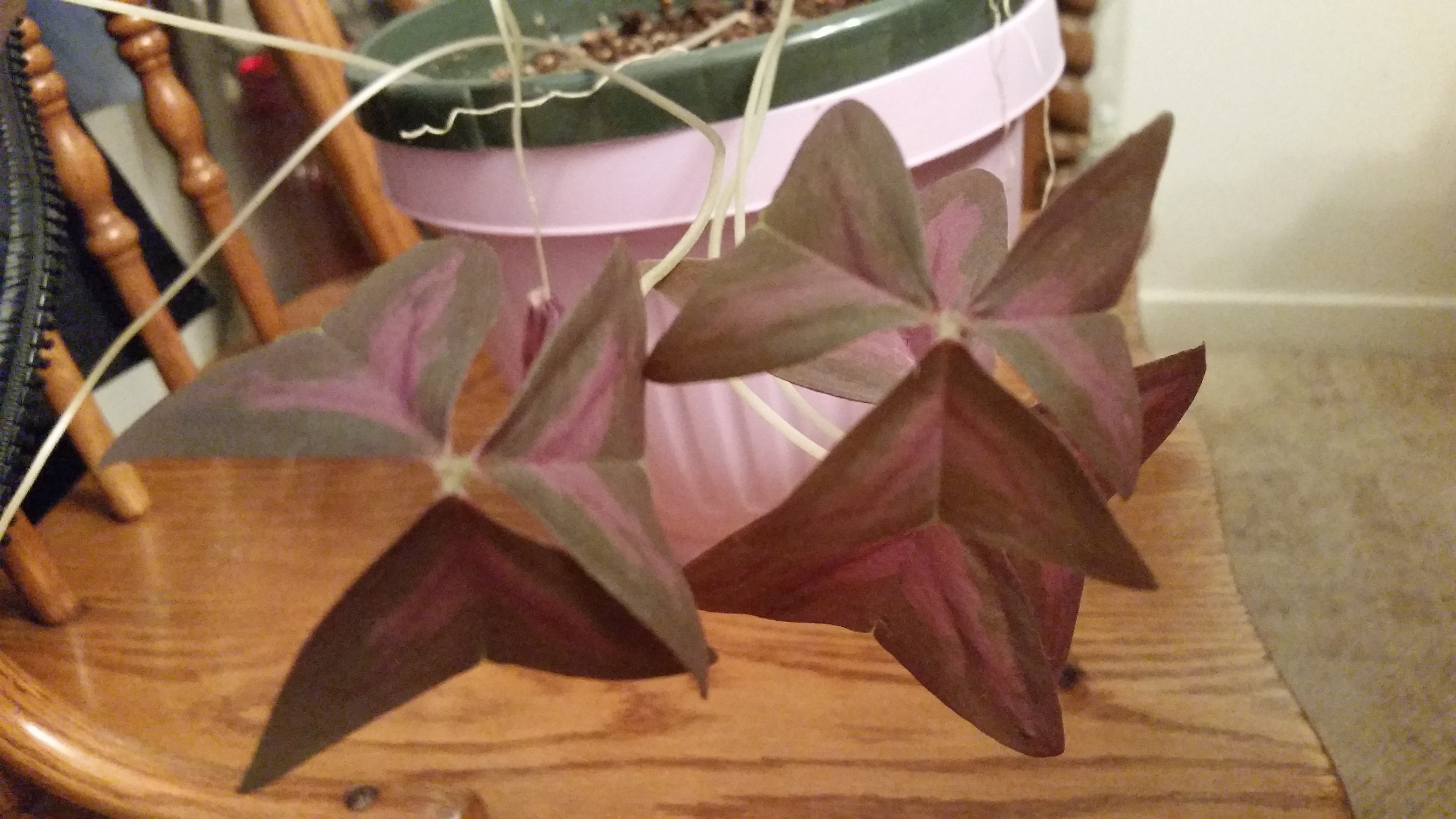
This reminded me of the time my beautiful, unique plant called the oxalis was nearly destroyed by my other kitten, Teddy. I was horrified to see it in such awful condition after coming home from work one warm and sunny summer afternoon.

20141229_164724

What is an oxalis?

  • It is part of the clover family, or false shamrocks.  They refer to this particular plant as the “three-leaf purple shamrock.” My daughter calls it the “butterfly plant” because of the petals looking exactly like a butterfly. I was first introduced to this interesting plant by a co-worker. I had asked her what it was, and she said she didn’t know, but it looked like butterflies to her.
  • There are over 900 different species of this plant. You can actually plant this one outside, too!

A couple of months later, I am perusing the Farmer’s Market in downtown Buffalo, and lo and behold, there it was! I asked the fellow working at this particular tent what it was, and he told me. I just had to get it! It was in a lot better condition than it is now, but I am happy to report that I have nursed it back to life. Little by little, just by watering it on a regular basis, it is starting to get bushy again.

This is a great addition to your houseplant collection because not only is it different, but it gives a burst of color to the sea of green that is common among your houseplants. It’s a talking piece, which is something I definitely like. I love looking at the expression on everybody’s faces when they see something and ask, “WHAT is that?”

Just like when I show people this plant:

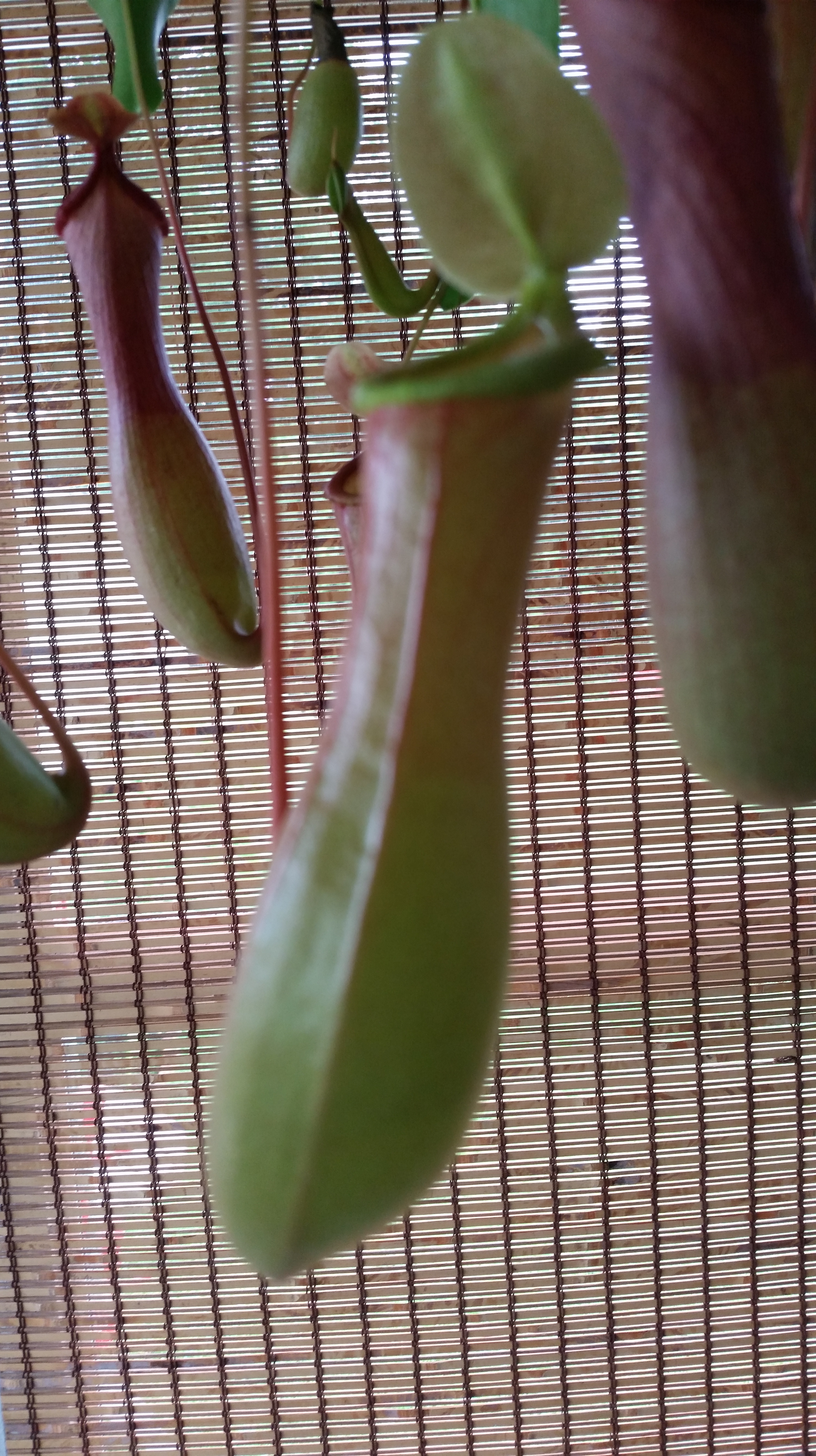
The pitcher plant is a carnivorous plant.

The pitcher plant is a carnivorous plant.

20140720_092735

This a Pitcher Plant. I squeed with joy when I went into my local supermarket (that boasts a great selection of houseplants, I must say) over the summer to find the exact plant I was going to purchase online because I couldn’t find it anywhere!

The Pitcher Plant:

  • Is a carnivorous plant just like the venus fly trap, meaning, they eat flies and other insects.
  • They “trap”insects in the “pitchers”, the leaves which are commonly known as “pitfall traps” filled with liquid.
  • There are several different kinds of pitcher plants.
  • This particular pitcher plant is tropical. They need warmth and need to always have moist soil.  I put my pitcher plant out on my enclosed patio for the summer, and bring it in to my bedroom the cooler months.

I have to admit, this has been much easier to take care of than I thought it would. Just watering it regularly and keeping the soil moist seems to be the trick. That, and because my bedroom is one of the warmer rooms in the house, it may think it’s in its native tropical setting.

*Not all species are tropical. You can find some of these in bogs in North America!

This is a GREAT plant to add to your collection. It is so unique and adds some real jazz to your home decor!

Here are just a couple of good examples of some different plants that add great value to your house. I have a few more that I am going to single out in future posts, but for now, hopefully these will give you some ideas on trying something different to keep the long winter days full of color and excitement!