Waiting out the ice storm and having tulip dreams of spring. Enjoy.

Waiting out the ice storm and having tulip dreams of spring. Enjoy.
This past weekend was one of the nicest first weekends of fall that I can remember! All of my fall-blooming plants are doing so well– I am so happy that everything is coming along!
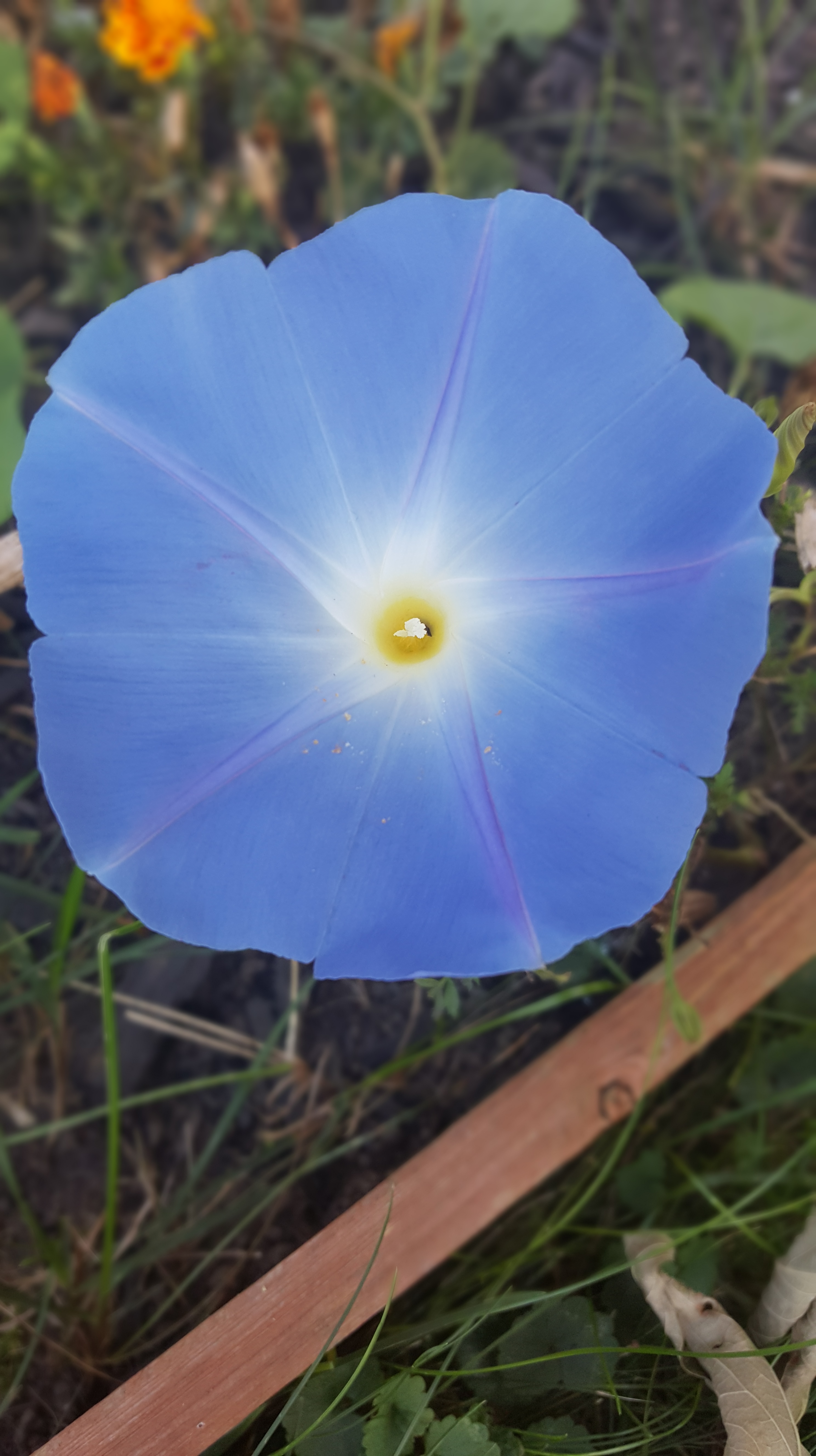
My first Morning Glory finally bloomed!
The problem with me is that when the weather is so nice, all I want to do is be outside, which leads to me neglecting my indoor household responsibilities. No worries, Monday and Tuesday were rain-filled days for us, and I was able to get a lot of stuff done inside. Which is the main reason why it’s Wednesday and I am just starting this post!
I was very busy in the garden over the weekend, and I went a little nuts on Friday after work. In a post not too long ago, I talked about Fall Bulbs and which ones I was going to plant. Heheheh ehh……yea, Friday night I went shopping at my local Lowe’s and ended up going bulb crazy! I also made sure to get my mums. I still would like to get a couple more of those as well.

Mums and Bulbs. Went a little crazy!
Yep, I even expanded my flower beds to accommodate the more than 100 bulbs I planted into that particular area!! And that was just one bed! I ended up with a total of 160+ bulbs in the ground by weekend’s end. Really?!!!
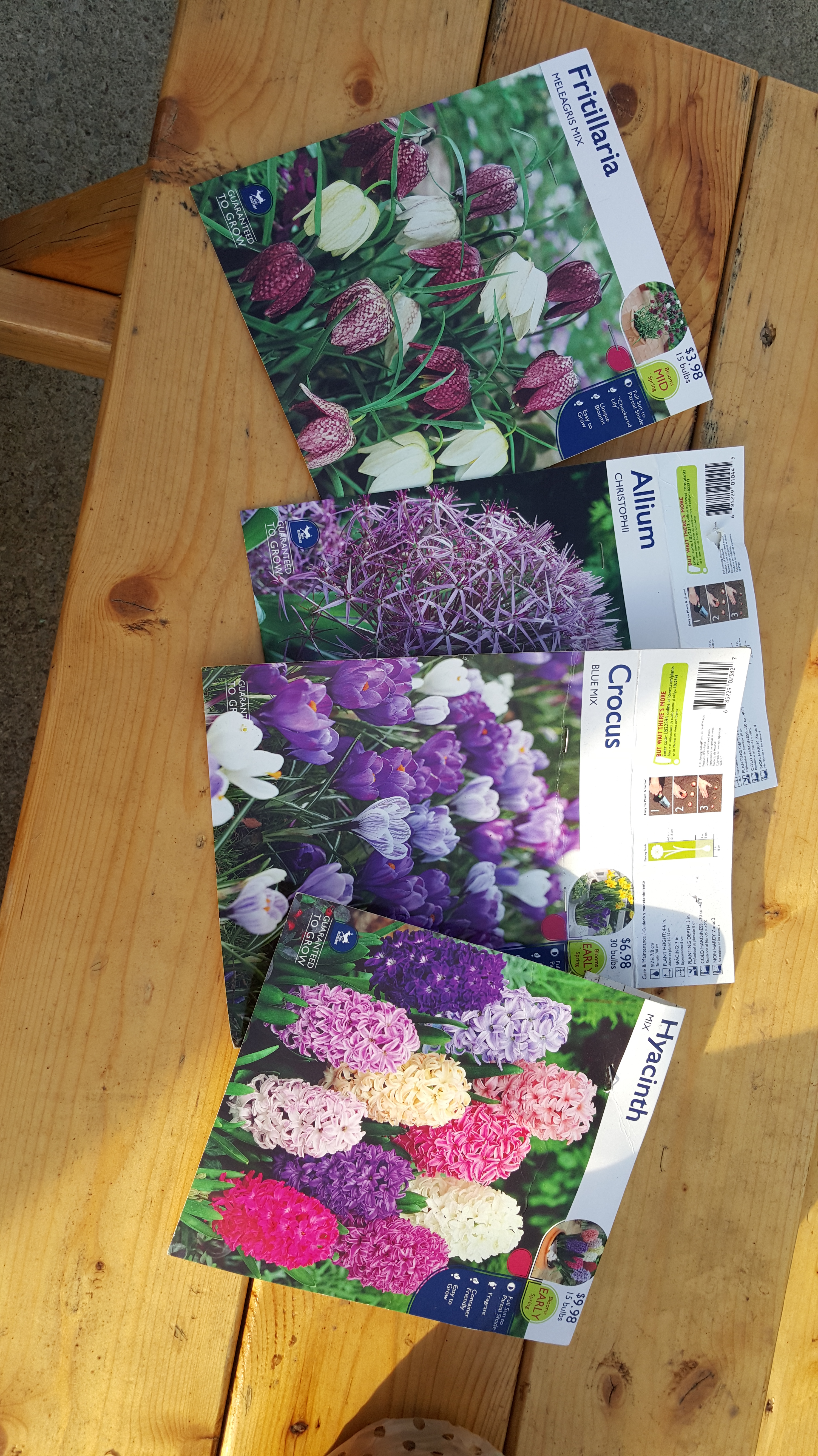
I really can’t help it. There are so many different flowers I want to try, and I end up getting the bulbs just to try them. I was lacking in the Spring-blooming plant department, so I pretty much made up for that over the weekend. It was exhausting, but I managed to get it done. I am still waiting for some other Allium bulbs to come in the mail, so when they do, I will be over the 200 mark with Spring bulbs. I think my four-season garden is coming along just fine now!
It dawned on me as I was just finding places to plant some of these bulbs that I needed to mark them in some way, shape or form. The past few years, I have forgotten where I have planted things, and end up digging them up and losing the bulbs.
Here is my tip for you when it comes to marking your bulbs you planted:
*I simply took pictures of the bulb packages in the exact space I planted them.
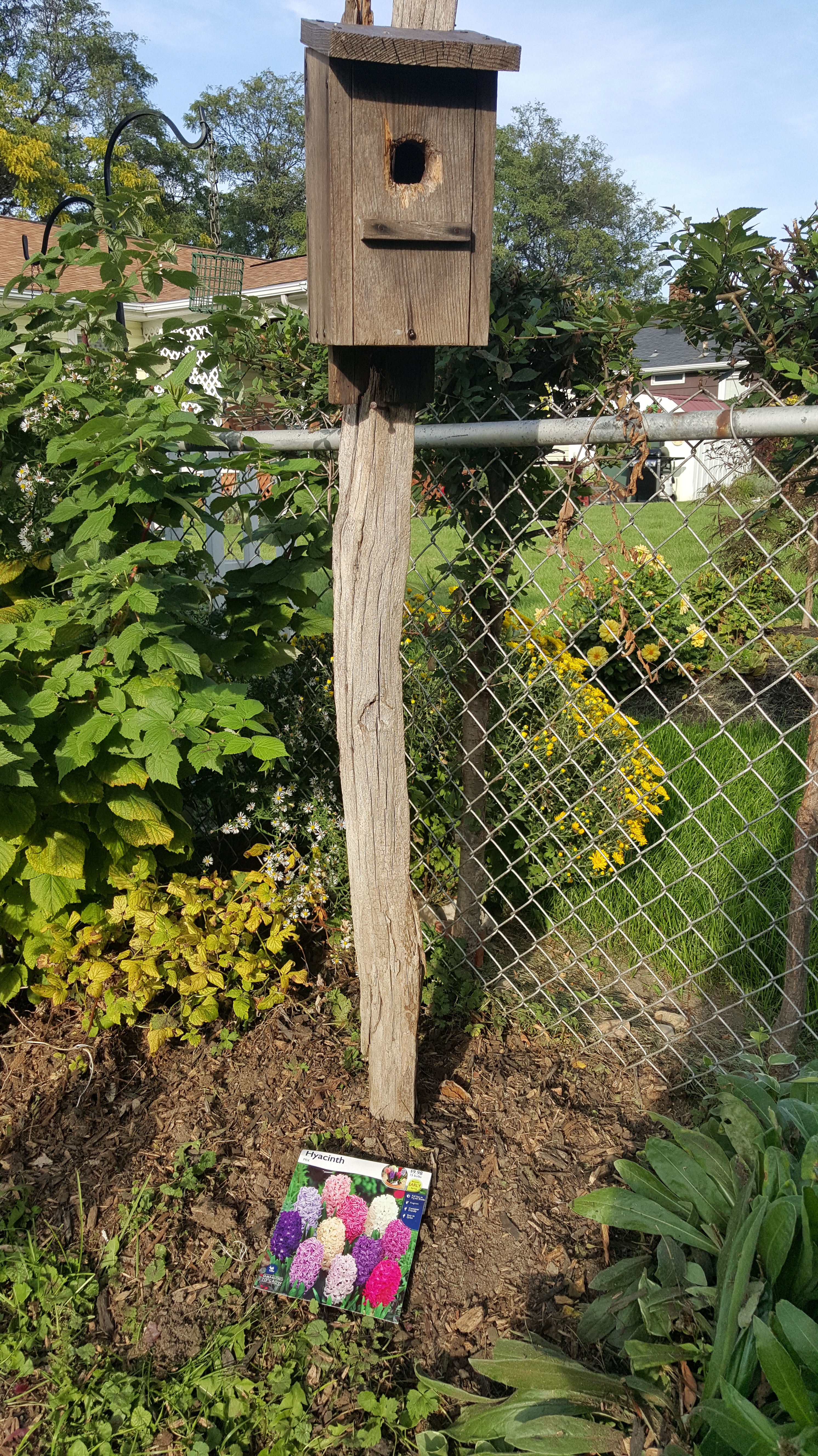
I planted hyacinths under my old bluebird house.
You may have other ways you mark your bulbs that are more efficient, but for me, to have photo proof keeps me from losing serious bulbs.
The overall effort of this mass bulb planting included purchasing four extra bags of dirt and the aid of a special little helper.

She did a good job, and to show my appreciation, we went to the playground and then sat on the roof of our local ice cream joint. There is no better place to watch the sunset than on top of Mississippi Mudds!


So, this coming weekend has us getting pumpkins–part of my front entryway fall decor. Can’t wait to share!
I love fall and everything that comes with it! I made a trip to Yankee Candle last Friday night to get some wax melts and fell in love with “Autumn Leaves” scent. I just got a coupon in the mail and can’t wait to get some time to run over again and get the big jar candle!
Oh, and my last musing for this post– my sunflowers. I did a whole tutorial last year on sunflowers and how to harvest the seeds. Well, with all the rain we received in the past two days, they collapsed and fell just like last year. I was disappointed this year because my sunflowers didn’t get nearly as big as they did last year. No matter, I cut the heads off to dry and was dragging 6ft. sunflower stalks to the curb. Here’s hoping for a better crop next year!

Whoever said gardening wasn’t exercise didn’t drag 6ft. sunflower stalks, that’s for sure!
As we all adjust to our regularly scheduled lives– kids back to school, getting back into work mode, vacations are over, etc., we now have to start thinking about what we have to do to get our gardens ready for next season! We have to make sure they get through whatever type of winter Mother Nature throws at us first in order to insure our spring bounty. So the first part of this “Fall” Into Spring Garden Prep is a natural– Spring Bulbs. What bulbs should you plant? How many should you plant? When is a good time to plant? Hopefully, I will be able to answer those questions for you.
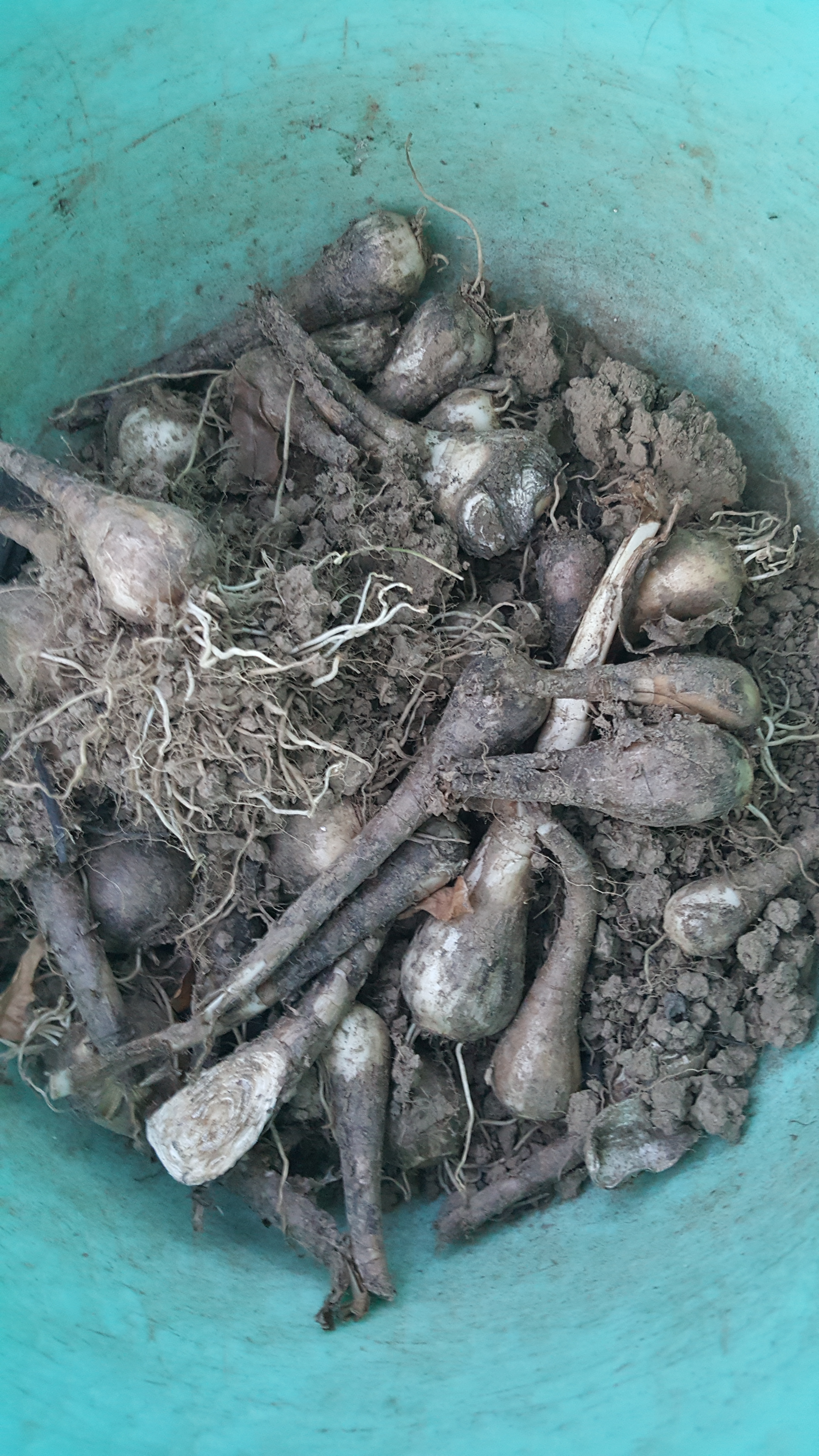
*First things first: you can plant bulbs anytime during the fall right up until the ground freezes. I was planting bulbs in early November a couple of years ago.
There are several garden seed/bulb catalogs out there that offer several different types of spring bulbs. There are so many varieties of daffodils, tulips, crocus and hyacinths that you shouldn’t have a problem finding the bulbs you would like.
Here are a few sites that I really like when it comes to the selection and variety of bulbs and seeds that are offered:
So, what bulbs should you plant?
Plant whatever bulbs you want! But, consider the factors: how much room do you have, do you have a large deer population, etc. There are several types of bulbs that are deer resistant, and you will notice that many garden websites have a whole section dedicated to them. If you have a lot of deer hanging around, stick with daffodils and allium varieties. Tulips are great, but deer tend to love them a lot. Another thing about tulips is that the bulbs tend to exhaust themselves over time, so you will be replanting them more often.
How many should you plant?
Well, as many as you want! Do you see a pattern here?! Whatever you want– just factor in how much space you have, and maintain adequate space between bulbs. You want to get as close to a four-season garden as you possibly can. Try to create a good distribution of spring-fall blooming plants as best as you can.
Bulbs that I am planting:
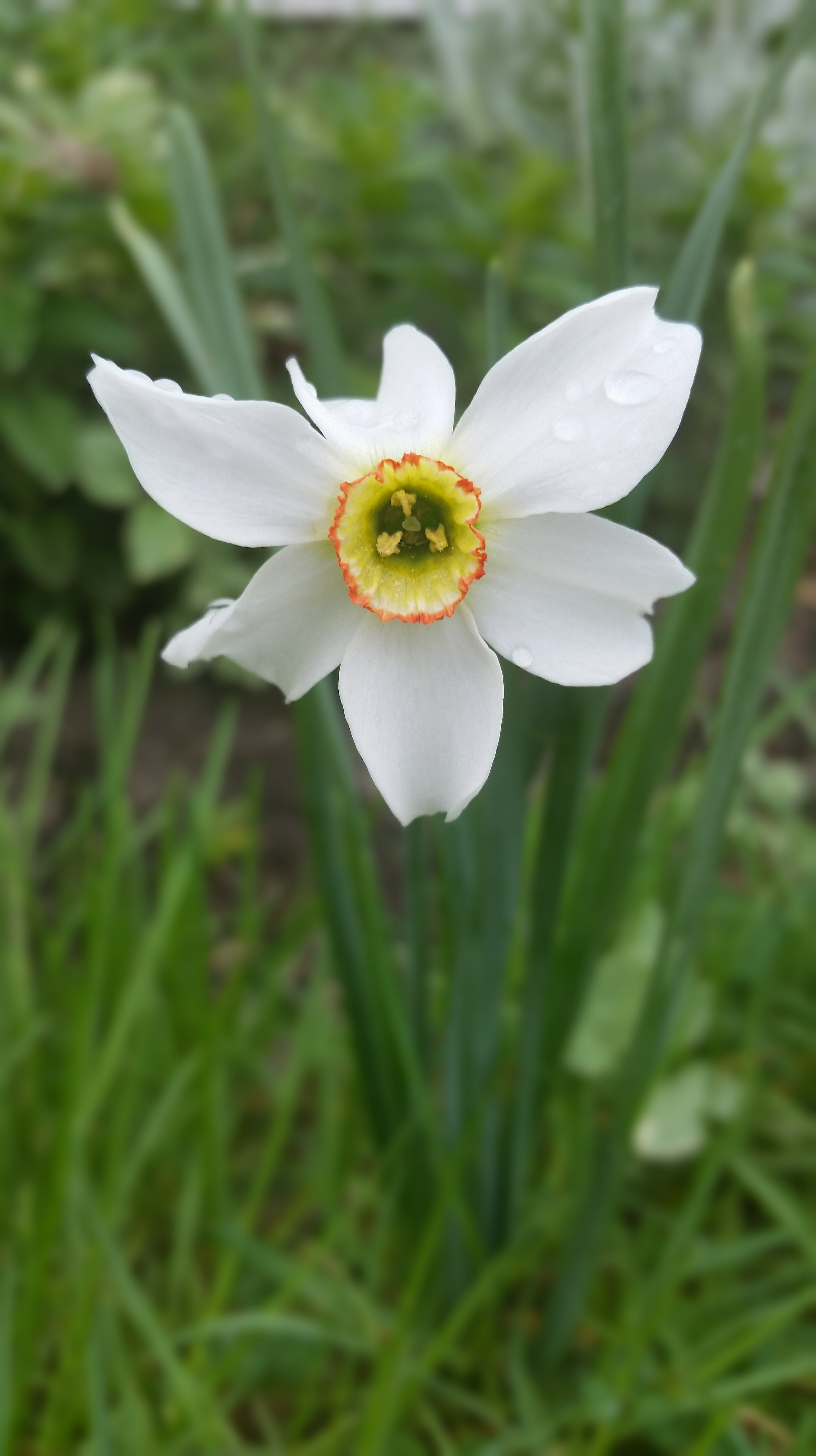
*Narcissus, Iris — I actually got these bulbs from my parents. The iris’ are close to 50+ years old, and were my grandmother’s. The narcissus were from my grandmother as well, so I am very happy that I have some of my grandmother’s flowers in my garden. After we had our house re-sided, my flower beds were destroyed from feet, and I completely changed it. Now, I have some iris’ and narcissus’ planted in there.
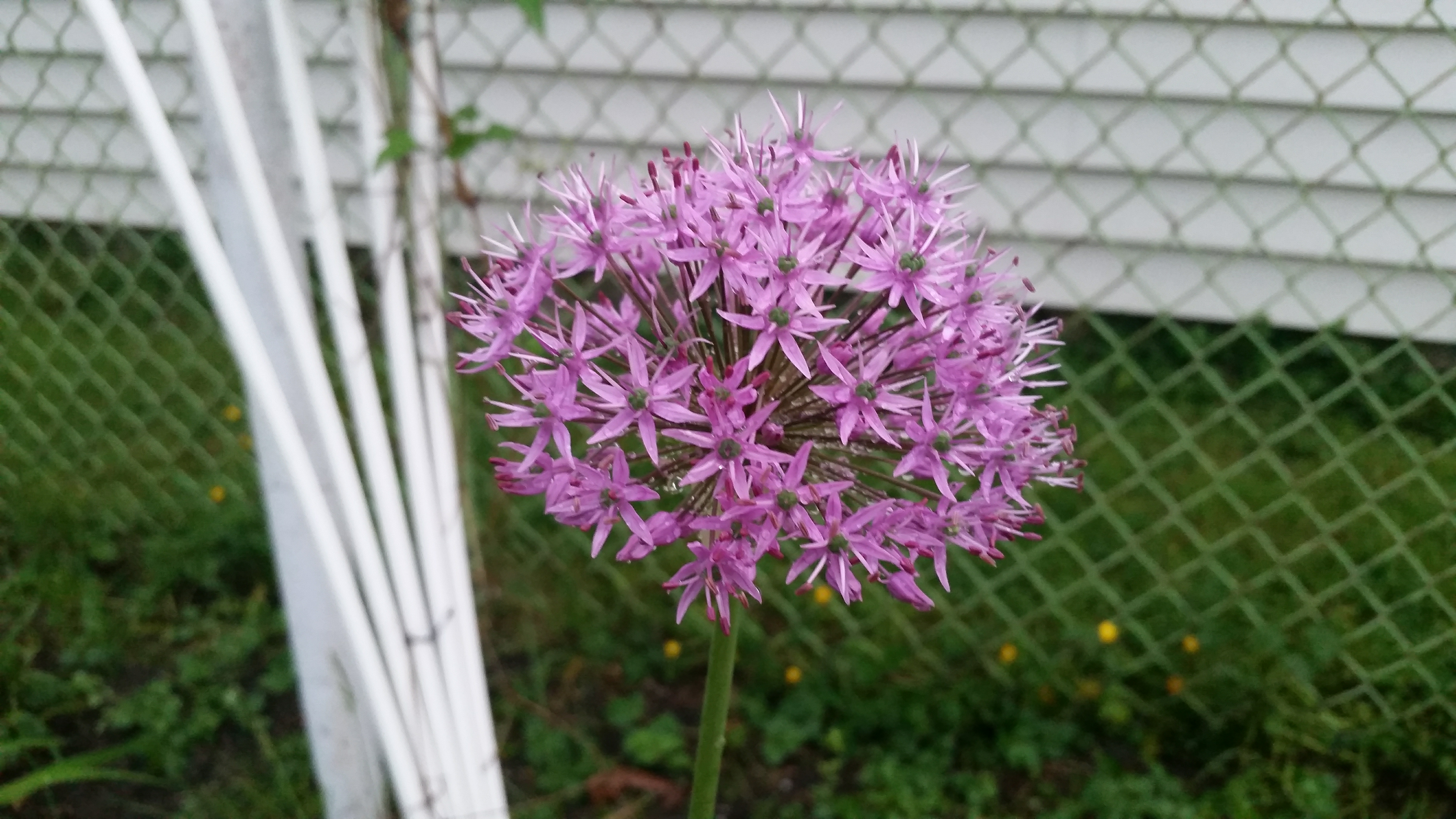
*Alliums — you know I love alliums. I went through a planting tutorial last year with allium bulbs. I am going to order some really neat varieties, and I can wait to show you what ones I will be planting!
*Daffodils — I am thinking of adding a few daffodils to the mix as well. I need deer resistant bulbs because of the problems my neighborhood has with our four-legged friends.
I hope this helps you a little to better understand spring bulbs and what you would like to plant. It is definitely worth the effort to plant bulbs now, because as everyone in a snow-filled area of the world knows, there is nothing better than seeing little flowers springing up from the ground after a LOOOONG winter!
Better late than never! Here is a great sign of spring. Ironically, they are called snowdrops…
Enjoy.

Wow! Time flies when you are having fun, right? My family has some excited things planned in the next few months– all home and garden oriented! It’s officially Spring on March 20– what do you have planned for your garden?

The daffodils at my neighbor’s house are coming up– a great sign!
The more important question is– do you know how to plan? Here are a few quick and simple tips on optimizing your garden this growing season!
Size does matter.
Plan on getting plants, shrubs, trees that will accommodate the size of your yard. If you have a very tiny yard, you wouldn’t want to plant a tree that at maturity could be over 80 feet tall. Go to your local nursery or greenhouse and talk to an expert there that could help you with choosing plants, trees, shrubs that will fit your space. You want a happy balance with anything you plant!
Be dynamic in your garden.
When designing a layout for your garden, make sure you add taller and shorter plants, as well as some ground cover. You want your garden to have “layers”, to make your landscape look “interesting”, kind of like winter interest, but for the warm months. Aesthetics are just as important in the garden as they are anywhere else! For example, plant a dwarf plum tree with daffodils and sedum (I’m just thinking of the different layers, so these are just my examples off-hand. There are many choices). Be aware that you are planting shade plants and full sun plants in the appropriate places.
Think about dynamics in the seasonal sense– if you would like to plant-based on what blooms during the spring, summer, fall — so your beds are always blooming. I know I made this mistake a few years ago by planting a nice bed full of tulips– well, what happens after they are done blooming? Thinking about these things now makes it much easier later!
Sketch it out.
Start a garden journal and sketch out what you would like your landscape to look like, and what you would like to plant. The off-season is the time to research plants and find the right ones for your hardiness zone. Enjoy the research/design process, it’s a time of enlightenment and discovery! You will see so many beautiful plants and different ways to design your yard, you won’t know where to begin! Those, my friends, are GOOD problems.
It was a beautiful sight today– the sidewalks are melting and turning into puddles! I managed to take a small walk on lunch today just to get outside for the first time in almost two months! Before we know it, the blossoms of spring will be in full bloom!
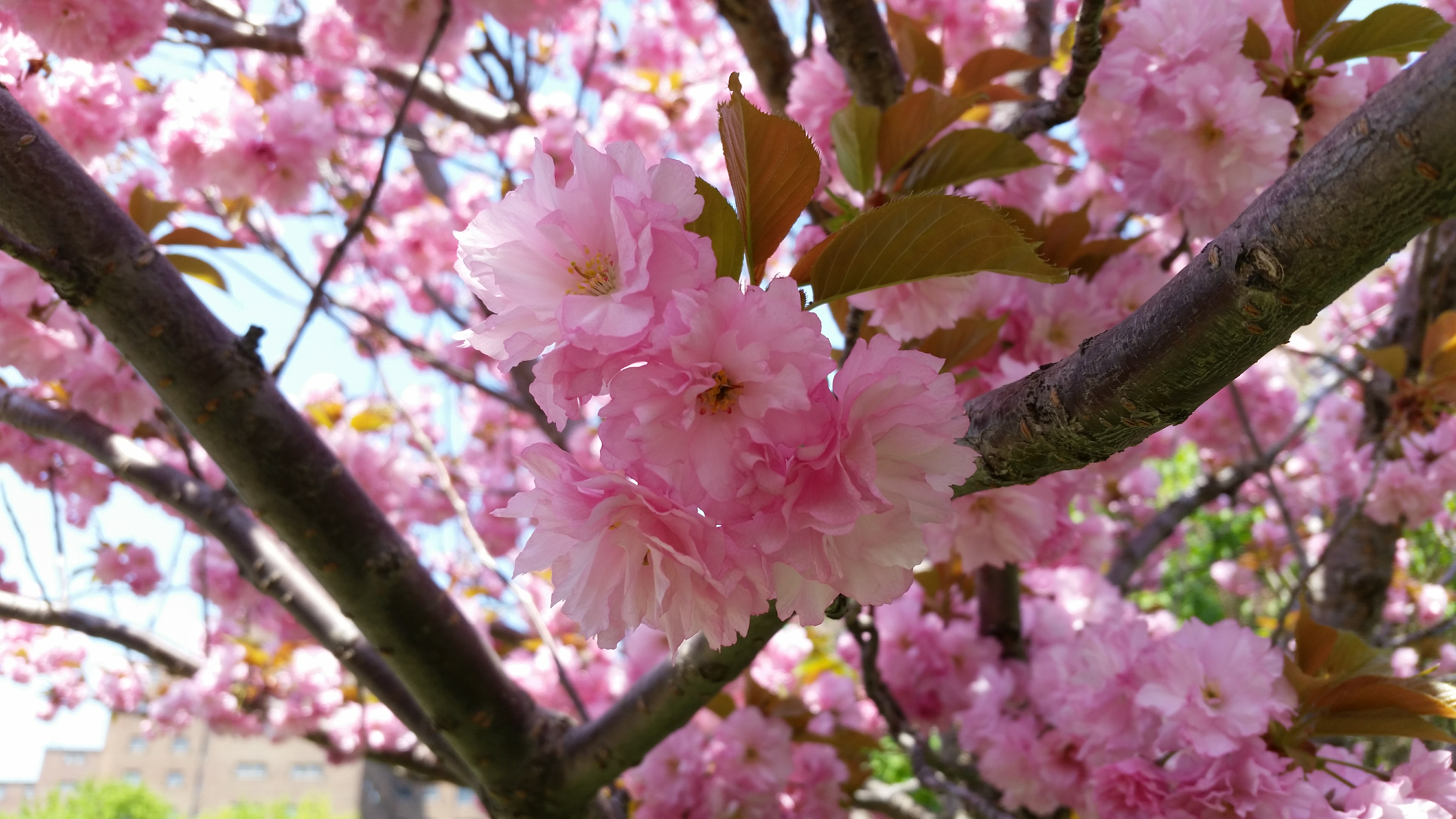
With spring a little under two weeks away, the time is NOW to get ready for the new season!
Are you ready? Here are the things you need to do now to get ahead of the game:


A bigger investment, but no less important — a wheelbarrow. This was the first thing my husband and I purchased after we got married! They are not too expensive–but again, worth its weight in gold if you want something a little bigger than a bucket.
If you follow these tips than you will be sure to kick off the coming growing season in the right direction.
Please feel free to share any other tips you have that will be handy this spring!
Disclaimer: This blog post is extremely general advice when it comes to exercising. I am not a doctor or fitness expert, but these are the exercises I have been advised to do over the years and think they are universal enough for everyone to try them. Please consult your doctor before starting any exercise program.
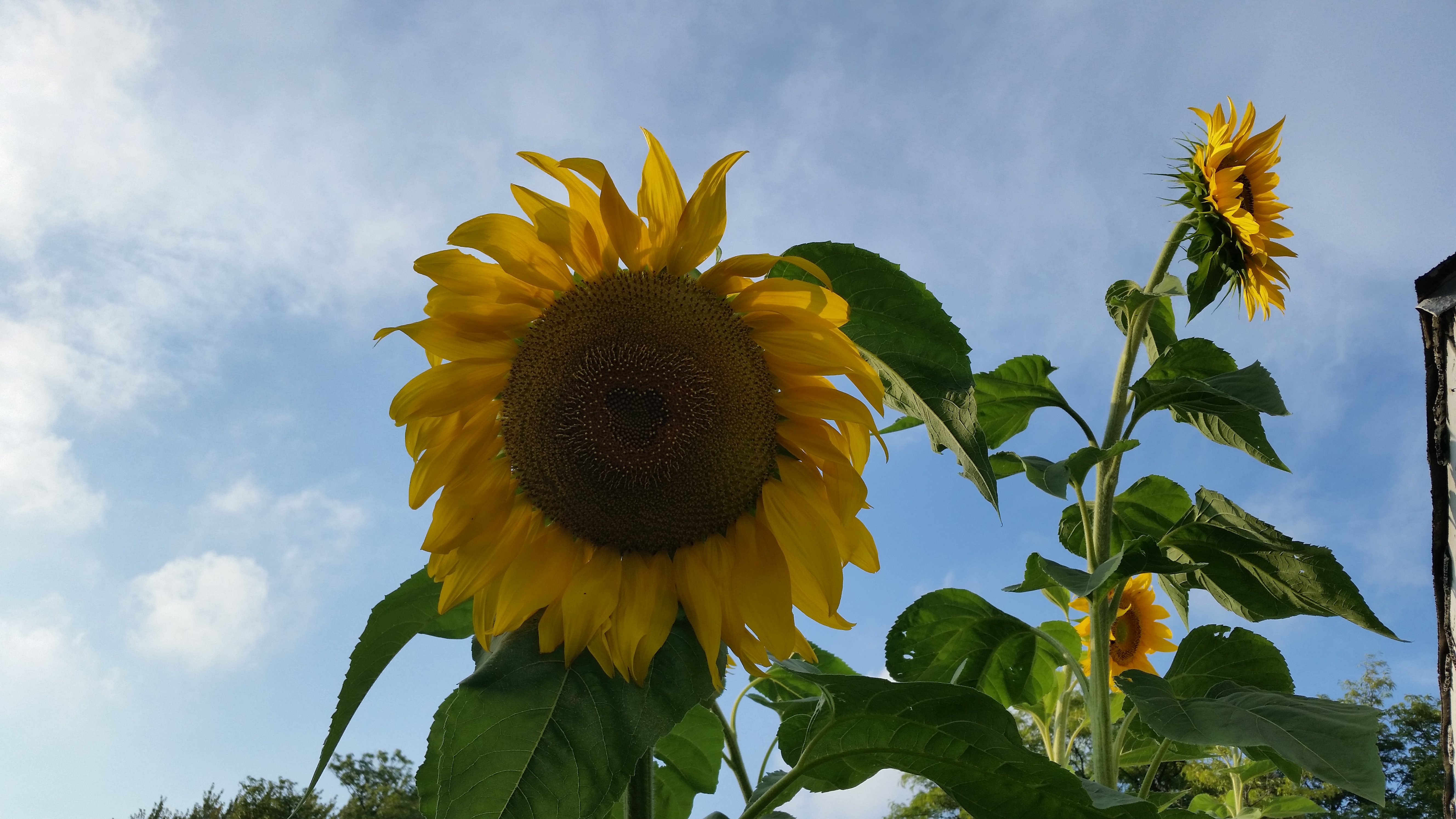
Warm weather is right around the corner!
Yet another birthday has passed for me. I celebrated my 35th birthday yesterday. Unfortunately sinus problems have been plaguing me since Thursday, so unfortunately all of my plans were put on hold. Still not feeling so hot, I didn’t get much of a chance to finish up another post I wanted to do today, but that’s ok. I thought this topic was rather appropriate and relevant for the buildup to breaking ground that first day of the new growing season!
Yes, as I laid in bed most of the day, I could hear winter’s grip loosening all around me– icicles dripping, streets are clear/slushy, and it’s a balmy 28 degrees! One thing we don’t think about often enough when we are anxious to get our hands back into the dirt is getting ourselves in shape for all the digging, shoveling, pruning and hauling that we will be doing. And now could not be a more perfect time! Spring is just 18 days away, and even though its hard for most people, exercise is important for everyone to do in order to avoid serious injuries in the garden.Take it from me, I know first hand what its like to have a major injury take you down in just one unnatural bend of the back, and be down for a month, at least.
So, here are some exercises you can do now that will get you limber for the garden this year!
Stretching – I have been an exerciser for over 15 years. I have done everything from running to Tae Bo (remember that?). Now that I am, uh-hum, 35, I have had to change the way I exercise in order to compliment my aging body. And one of the ways I have changed is by taking stretching seriously.
The best stretches to avoid low back injuries include:
Walking— is low impact and effective. If you are new to exercising, just walking around the block and gradually making your way up to a mile and more can give you significant health benefits. But make sure you are walking at an uncomfortable pace– a pace where it is hard to talk. You need to push yourself in order to get benefits from any exercise.
Strength Training — lifting light weights is so important to building and maintain strength when gardening. You can purchase a pair of 3-5 pound weights and it can do wonders for your health. The more you lift weights now, the easier it will be to carry bags of mulch later! You can find many weight training programs in health magazines, as well as online.
Core Training— they don’t call your core your “powerhouse” for nothing. My weak core is the reason for my lower back muscles getting pulled three times in a year. Core training is the most important exercising you can do for preparing for the gardening season. Ask your doctor for a few good ones, but the one I like the best is the plank.
A few extra tips:
Doing these things now will help you get around your garden much easier later on!
 The Bent Trowel